
Friday briefing: Why does your Easter egg feel smaller? Because it is
In today’s newsletter: Cocoa shortages, climate shocks and global conflicts have collided to make chocolate pricier than ever before
Good morning. Today is Good Friday – if you are following the western church calendar, at least – which still leaves time to panic-buy Easter eggs. While you are doing that, you will almost certainly leave with the impression that you are paying more for less. Why?
Shrinkflation is the answer. The chocolate economy has been hit by a series of shocks over the past few years, meaning the pound in your pocket now buys a lot less cocoa than it once did.
For today’s newsletter, I spoke to Zoe Wood, the Guardian’s consumer affairs correspondent, about why chocolate has become such a visible symbol of inflation, and whether there is any hope that prices might fall again. First, here are the headlines.
Five big stories
-
Middle East | Emmanuel Macron has sharply criticised Donald Trump’s inconsistent pronouncements on the Iran war and Nato, saying if “you want to be serious” it was better not to come out with something different every day.
-
UK politics | Yvette Cooper said coordinated action was needed as more than 40 countries gathered to discuss “every possible diplomatic, economic and coordinated measure” to pressurise Iran into reopening the strait of Hormuz.
-
NHS | The NHS is bracing for the longest strike yet by resident doctors after last-ditch talks failed, prompting Wes Streeting to accuse the medics of suffering from “delusion”.
-
Reform UK | Reform UK’s housing spokesperson has been sacked from his role after he described the Grenfell Tower fire as a “tragedy” but said that “everyone dies in the end”.
-
Weather | The UK is bracing for Storm Dave over Easter with winds up to 90mph expected.
In depth: ‘People don’t like feeling ripped off. You might just decide you’re not prepared to pay that price’
This is shrinkflation: the practice of reducing a product’s size, weight, or quantity while keeping the price the same, effectively raising the price per unit, acting as a hidden form of inflation. It is particularly acute in the chocolate market, where the climate crisis is affecting cocoa growers.
“It’s pretty straightforward,” Zoe says. “You’ve had a huge surge in cocoa prices, then energy shocks after Russia’s invasion of Ukraine, and now fresh disruption from conflict in the Middle East. All of that is still rolling through the economy – which is why shrinkflation feels here to stay.”
What has caused the price increases?
“What you’ve had,” Zoe says, “is a huge spike in cocoa costs.” Today the price of cocoa is about £2,500 a tonne, but in 2024 it peaked at nearly £9,000.
“It’s nowhere near that peak now, but there’s a time lag because companies buy cocoa in advance on contracts. Big manufacturers would have had some cocoa at lower prices, but they also had to buy at those very high prices. There’s about an 18-month delay before price changes fully feed through,” she says.
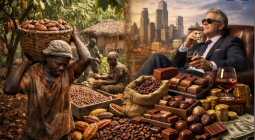
The cause? The climate crisis. “It was down to impacts on harvests in west Africa responsible for about 70% of global cacao production – particularly in Ghana and the Côte d’Ivoire. They had very difficult growing conditions, with heat, disease and unusual rainfall in recent years contributing to falling production which led to a shortage of cocoa,” explains Zoe.
Some manufacturers have even shifted away from cocoa altogether, producing “chocolate-flavoured” products using alternatives such as palm or shea oil. Club and Penguin bars are no longer allowed to describe themselves as featuring chocolate.
The price of cocoa may have fallen back to a more reasonable level, but it doesn’t necessarily follow that the price of chocolate on our shelves will fall.
Why do people care about the price of chocolate so much?
Rather like Olympic swimming pools, football pitches or “a country the size of Wales” becoming a shorthand for various sizes, the price of a Freddo has become a kind of shorthand for inflation. (It was 10p from 2000 to 2010, but last year reached 35p, in case you were wondering)
Part of that, Zoe explains, is because groceries are universal. “It’s a very crude measure of the cost of living. Retail is something everyone has an opinion on because everyone has to buy food.”
That visibility helps explain why chocolate has become so culturally loaded. Alongside familiar, cyclical culture-war rows (“GCSEs are too easy!”; “That person on TV wasn’t wearing a poppy!”; “It’s Merry Christmas, not Happy Holidays!”) comes the annual complaint that Easter eggs are no longer called Easter eggs. Last year Cadbury’s even had to put out a statement saying, “Rest assured that all Cadbury Easter Eggs sold in the UK reference Easter. Cadbury has used the word Easter in our marketing for over 100 years and we continue to do so.”
“I think that’s a bit of a distraction,” Zoe says. “I don’t think there’s any deliberate attempt by retailers to downplay Easter. You see similar complaints about hot cross buns or mince pies. It excites people, but retailers just want to sell their product.”
Calls for boycotts over pricing, portion sizes or overseas ownership crop up regularly, but “that ship has sailed”, she says. “Most big chocolate brands aren’t UK-owned anyway.”
Although she recognises people will still forgo their Easter chocolate, on a point of price as well as principle.
“People don’t like feeling ripped off. You might just decide in the supermarket that you’re not prepared to pay that price.”
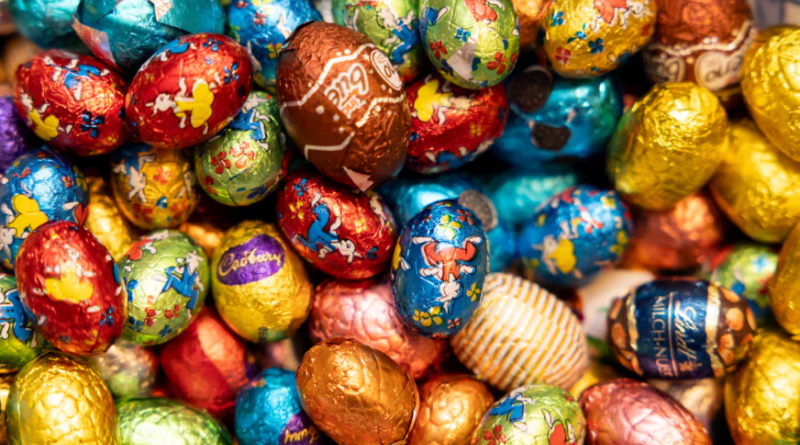
Easter eggs, she adds, have historically been loss leaders – discounted to get shoppers through the door. “If you look at Easter eggs now, they can work out at £40 to £50 per kilo. That’s why they’re getting smaller – it’s the only way to keep the shelf price at something people might pay. Even then, they’re often heavily discounted.”
But things will get cheaper again, right?
After Russia’s invasion of Ukraine, there was a sharp increase in shelf prices, with food inflation reaching about 19% at its peak.
“There’s that old expression – prices go up like a rocket and fall like a feather,” Zoe says. “I wouldn’t be overly optimistic about big price falls. We still have inflation – it’s just not rising as quickly as it was.”
And there may be more pressure to come. “We’re now looking at the possibility of another round of food price inflation, driven by supply chain disruption and energy costs linked to conflict in the Middle East.”
There is also a delay built into the system. Fuel prices react quickly to shocks, but food takes longer. “With food, it’s more of a slow-burn effect. You have to buy ingredients, ship them, manufacture the product, then distribute. If disruption continues, you might see the impact in the summer.”
Is there any way to feel better about what you’re buying?
For those thinking more broadly about what they buy, Zoe points to the growth of more ethical brands. “There are companies like Tony’s Chocolonely that focus on fair supply chains.”
And even the big brands, she adds, now often carry Fairtrade or Rainforest Alliance certification.
If you are still in the market for Easter eggs, then Tom Hunt taste-tested British supermarket ones for the Filter – a job I am slightly envious of.
So whether you are marking the religious holiday, the long weekend, or simply the annual ritual of eating slightly too much chocolate, enjoy it – and have a very happy Easter.
Cover photo: Shrinkflation is just inflation by the back door. Photograph: Teagan Glenane/The Guardian