

Humanitarian Reset: Reflection from India for Humanitarian Networks and Partnerships Week 2026
As India rapidly advances toward the national vision of Viksit Bharat 2047, its humanitarian system stands at a critical juncture. Climate-induced disasters, intensifying heatwaves, urban vulnerability, public health emergencies, and slow-onset crises are testing not only response capacity but the deeper foundations of accountability, protection, and citizen-centred governance. While institutional architecture has expanded since the Disaster Management Act, 2005, with the help of the National Disaster Management Authority (NDMA), persistent opportunities remain in further translating commitments into prosperity-centred outcomes for all affected people.
Recognising this moment, the All India Disaster Mitigation Institute (AIDMI), with RedR India, and Humanitarian Aid International (HAI), convened a national virtual roundtable on December 30, 2025, titled “Accountability First: Ten Reset Questions Shaping People-Led Humanitarian Action”. The roundtable brought together more than 65 practitioners, policymakers, researchers, and civil society leaders to reflect on how humanitarian accountability must evolve in India’s climate-challenged future. The discussions and insights from this dialogue offer timely reflections for Humanitarian Networks and Partnerships Week (HNPW) 2026, where global humanitarian actors will examine reform, relevance, and renewal of the system in historic uncertainty.
Reflection from India
The Indian humanitarian experience highlights a fundamental truth: accountability begins not with institutions, but with affected people. Opening the dialogue, Mihir R. Bhatt, Director of AIDMI, emphasised that accountability is not synonymous with audits or compliance alone anymore. Instead, it encompasses listening, transparency, dignity, protection, and shared responsibility across preparedness, response, and recovery. He said that such a shift makes the humanitarian system more humane. Drawing on decades of field engagement with disaster-affected communities, informal workers, and small businesses, he noted that weak accountability erodes trust, delays recovery, and magnifies protection risks—particularly for women and marginalised groups.
A critical dimension of the discussion focused on the safety and rights of humanitarian workers themselves. Rajeev Kumar Jha, Director for DRR and Climate Change Adaptation at Humanitarian Aid International, highlighted the absence of a comprehensive national framework in India to protect frontline responders. Citing regional research across the Asia-Pacific, he underscored the urgent need for formal recognition of humanitarian worker safety, insurance, and institutional safeguards, aligned with emerging international charters.
From a policy and legal perspective, P. G. Dhar Chakrabarti, once the director of the prestigious National Institute of Disaster Management (NIDM), reflected on India’s humanitarian evolution since 2005, while cautioning against the dilution of minimum relief standards. He argued that humanitarian action must address not only sudden disasters but also slow-onset crises such as extreme heat and urban environmental stress, which disproportionately affect low-income households and informal workers.
Reinforcing this call for a structural reset creatively, N. Vinod Chandra Menon, Founder Member of the National Disaster Management Authority, noted the lack of clear standards, consistent training in humanitarian values, and robust monitoring mechanisms. Accountability, he stressed, must be embedded throughout the disaster cycle and not treated as an afterthought by leading institutions.
What These Reflections Mean for HNPW 2026
India’s reflections resonate strongly with the core concerns of HNPW 2026. First, they reaffirm that humanitarian reform must move beyond global commitments to context-specific accountability rooted in affected people’s lived realities. Second, they highlight the urgency of integrating climate and environmental accountability into humanitarian frameworks, especially for slow-onset and compounding risks such as heatwaves. Third, they remind global networks that humanitarian workers themselves require protection systems that match the risks they face.
For HNPW 2026, India’s experience offers a practical lens: accountability is not an abstract principle, but a daily practice shaped by governance choices, standards of relief, protection mechanisms, the ability of institutions to listen and respond to affected communities, and the economic path we take.
Way Ahead
Looking ahead, a humanitarian reset in India—and perhaps globally—requires re-establishing minimum standards of relief—for humans as well as nature—as enforceable rights, not discretionary measures. It calls for the development of a national humanitarian charter in each country that integrates climate risk, environmental protection, and affected people-centred accountability. Strengthening humanitarian data systems and its local ownership, particularly needs and response databases, will be essential to ensure transparency and informed decision-making, not by a few but by all.
Equally important is the shift toward cash-based assistance and anticipatory action that supports resilience rather than dependency. These measures must be complemented by institutional protection frameworks for frontline workers, recognising their safety as a public responsibility.
Action
Concrete actions emerging from the Indian dialogue include restoring and safeguarding minimum relief standards that also address climate resilience and environmental needs, formalising protection for humanitarian workers, institutionalising accountability mechanisms across the disaster cycle with affected people in the lead, and ensuring that climate and environmental considerations are embedded in humanitarian planning. These actions demand creative and radical collaboration between government, civil society, academia, and international partners—precisely the kind of partnerships that HNPW seeks to advance.
Learning
The central learning from India’s reflection is clear: humanitarian accountability is inseparable from dignity, protection, and justice. Without minimum standards, protection frameworks, and meaningful participation of affected people, humanitarian action risks becoming reactive charity rather than a rights-based public responsibility. As HNPW 2026 convenes global actors to reflect on the future of humanitarian action, India’s experience offers a grounded reminder that accountability—to people and to nature—is the backbone of credible, people-led humanitarian response in an otherwise uncertain humanitarian future.
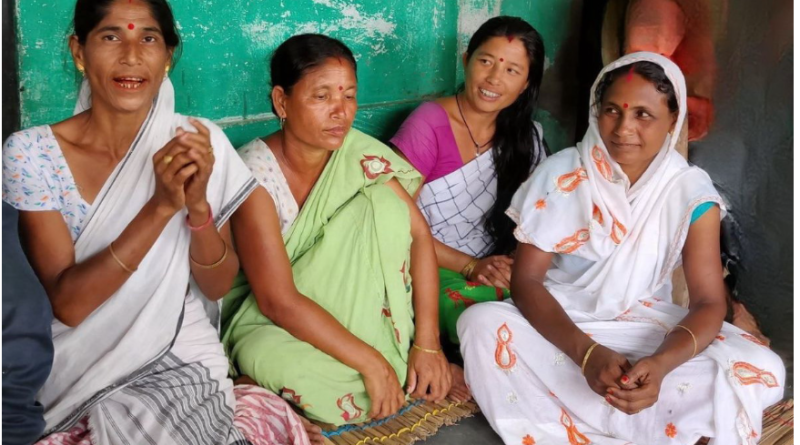
Cover photo: By AIDMI