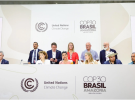
Typically, misinformation campaigns have been well funded, but the same isn’t true for science-education and communication efforts, Clark says. In November 2024, the Brazilian government, the United Nations and the UN cultural organization UNESCO announced the Global Initiative for Information Integrity on Climate Change, which will support research into climate disinformation as well as public-awareness campaigns. Clark sees this as a step in the right direction.
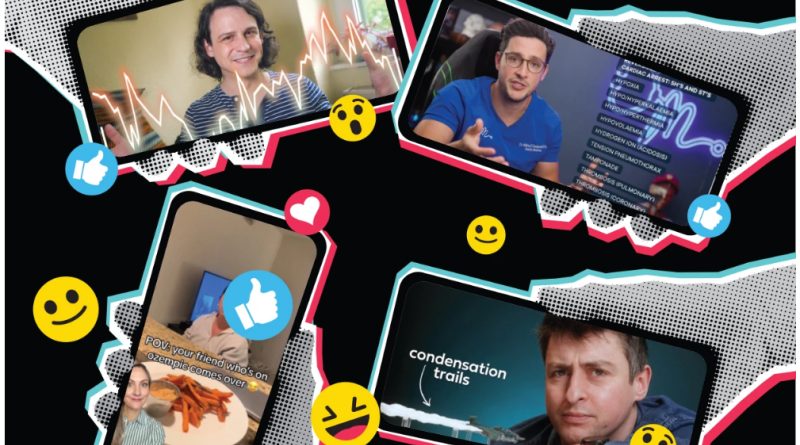
Although engaging on social media can be time-consuming, Burke-Garcia encourages scientists and public-health professionals to do so. She also wants them to collaborate with all kinds of influencers, to build relationships that enlist these influencers to spread science-backed information. “We need more health conversations in non-traditional contexts,” she says.
Doctor Mike is part of a UN initiative called Verified, which began during the COVID-19 pandemic and aims to spread accurate information about health, climate and other topics, and to encourage meaningful action. The World Health Organization (WHO) has also seen the value of supporting influencers who engage on health topics. In 2020, the WHO created a network of health-care influencers, named Fides (for the Roman goddess of trust and good faith), who are committed to fighting misinformation. The WHO also works with social-media platforms, which have their own policies about misinformation, to flag specific cases and identify emerging trends to improve targeting of science-based health information.
Burke-Garcia says that more content creators, networks and platforms, together with greater monetization, have brought complexity to the influencer space. However, there are still opportunities for impact. “We can’t be shrinking away from this space,” she says, “because it’s not going away.”