

Africa: 12 Critical minerals identified as key to development
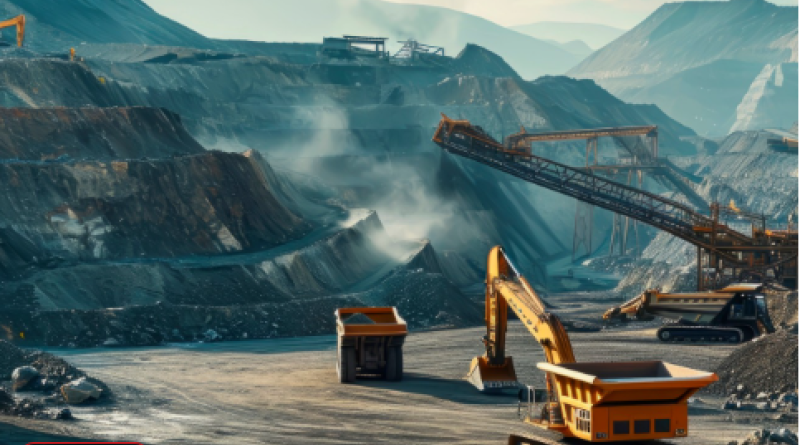
An AfDB policy brief – A Dozen Critical Minerals for Africa’s Inclusive Growth and Development – says Africa remains at the extraction stage
Africa can convert its mineral endowment into diversified, higher-value growth by focusing on 12 strategically important critical minerals while closing structural gaps in power, logistics, technology and capital.
This is the crux of a policy brief by the African Development Bank (AfDB), A Dozen Critical Minerals for Africa’s Inclusive Growth and Development.
The brief states Africa remains concentrated at the extraction stage. It holds:
- 7% of global nickel reserves but less than 2% of refining capacity
- 29% of bauxite reserves but less than 1% of alumina refining
- supplies about 64% of manganese ore with minimal refined output
Also, in steel, the continent contributes only 4% of global production, reinforcing import dependence and lost value capture.
Critical minerals and the energy transition
About 600 million Africans lack electricity, highlighting domestic demand for copper-intensive electrification and grid investments. The brief recommends pragmatic, country-specific industrial strategies.
Where power, water and logistics are competitive, midstream processing can deepen capabilities; where they are not, governments should prioritise fiscal rents, geodata acquisition and enabling infrastructure and skills before mandating local processing.
Regionally, AfCFTA-enabled hubs and shared infrastructure such as the Lobito Corridor could aggregate scale for refineries and precursor plants that single countries cannot sustain alone.
The report also says de-risking will require blended finance, guarantees, first-loss capital, green bonds and mineral value-chain venture funds to attract private investment across batteries, foundational metals and specialised inputs.
Sustainability is presented as a competitive strategy, including formalising artisanal and small-scale mining, adopting ESG and traceability for battery supply chains and leveraging renewable energy to produce low-carbon aluminium and green steel.
Mineral wealth in Africa remains ‘under-used’
The AfDB analysis says Africa’s mineral wealth remains under-used, with minerals and metals largely exported with limited added value.
It also notes decades of underinvestment in geological surveys and limited integrated geoscience, leaving the continent’s true resource endowment insufficiently mapped.
While some minerals such as nickel, cobalt and lithium appear on importing countries’ critical mineral lists, the report says they are critical for Africa’s development because they support agriculture, construction, manufacturing and low-carbon energy systems and underpin equitable resource-based industrialisation.
The report identifies three global trends reshaping mineral-rich developing countries’ options:
a. Critical Minerals and the New Energy Security Paradigm: The shift to renewable energy technologies is increasing demand for critical energy transition minerals beyond fossil fuel technologies, making access to minerals a matter of supply security.
b. Renewable Energy to reach price parity: Repricing of energy production technologies makes clean technology among the lowest-cost options on a lifecycle basis.
c. Towards Equitable Resource Partnerships in the Energy Transition: Debate over global economic relations between ‘winner takes all” and “win-win” benefit sharing.
Industrialisation pathways
The report argues mineral processing or mineral-based manufacturing offers a feasible industrialisation path because it builds on existing resource endowments and can generate upstream and downstream linkages.
However, countries with small reserves, high energy costs or weak logistics may be better served by capturing fiscal rents and investing in infrastructure, skills and technology.
Iron ore and steel are described as fundamental enablers of broader industrialisation, with steel consumption linked directly to infrastructure and manufacturing. Without domestic steel capacity, the report warns, Africa will continue exporting low-value ore and importing finished products.
Copper is central to electrification, telecommunications, transportation, alloys and construction, while the continent’s large population without electricity creates substantial domestic demand for electrification projects.
Bauxite and aluminium illustrate value-chain exclusion: despite 29% of global reserves, Africa accounts for less than 1% of alumina refining and only 2% of aluminium smelting. Renewable energy could support future refineries and green aluminium production.
Lithium, cobalt, graphite, nickel and manganese form the core of battery chemistries for electric vehicles. The Democratic Republic of Congo accounts for about 70% of global cobalt supply. Graphite reserves in Tanzania, Madagascar, Malawi and Namibia are exported mainly as raw material.
Nickel and manganese also remain primarily linked to steel and alloys.
Platinum group metals, vanadium, phosphate and rare earth elements are identified as specialised industrial inputs linked to hydrogen, grid-scale storage, agriculture and high-tech manufacturing. The report notes China’s dominance in rare earths and potential partnership opportunities for African producers.
The 12 critical minerals crucial for Africa
- Nickel: Used mainly in stainless steel and also in electric vehicle batteries and energy storage.
- Copper: Central to electrification, renewable energy deployment, telecommunications, construction and manufacturing.
- Cobalt: Key battery material, with the DRC supplying roughly 70% of global output.
- Lithium: Core battery mineral for electric vehicles and energy storage technologies.
- Bauxite: Ore used to produce alumina and aluminium; Africa holds 29% of global reserves but little refining capacity.
- Phosphate: Linked to fertiliser production, agricultural productivity and lithium iron phosphate battery cathodes.
- Platinum group metals (PGMs): Used in catalytic converters and emerging hydrogen fuel cells and electrolysers.
- Iron ore: Foundation for steel production and infrastructure development.
- Rare earth elements (REEs): Critical for high-tech manufacturing and clean-energy technologies, though Africa produces less than 1% globally.
- Manganese: Mainly used in steel production, with growing battery applications.
- Graphite: Important for battery anodes, with African reserves largely exported in raw form.
- Vanadium: Used in steel alloys and vanadium redox flow batteries for grid-scale energy storage.
-
What critical minerals could represent for industrialisation in Africa
The report concludes the minerals collectively represent significant potential for industrialisation, employment, technology acquisition and economic diversification.
It says resource ownership alone confers limited benefits and that countries must translate geological endowments into industrial capabilities and quality employment through deliberate policy choices, regional coordination and investment.
It also states Africa’s development priorities for jobs, energy and diversification align with global demand for secure and green supply chains, adding that minerals can unlock investments in power, infrastructure and skills needed for broader economic development.
Cover photo: : maximusnd ©123rf