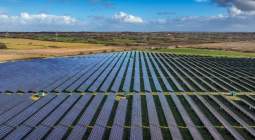


The future of solar lies on the back of the cell
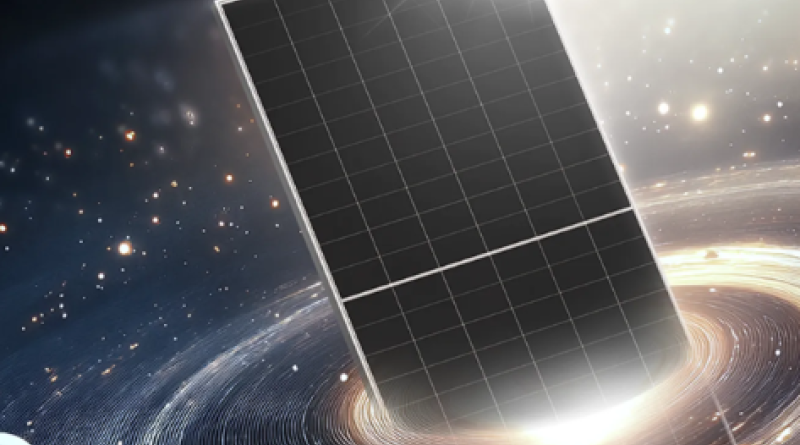
Back Contact (BC) technology is emerging as the next industrial engine of PV efficiency, cost-competitiveness and long-term reliability.
On its current trajectory, by 2030, solar photovoltaic (PV) will account for over 70% of new renewable capacity additions, and by 2050, it is expected to supply half of the world’s electricity.
However, the challenges impeding market growth are overcapacity, price compression and intensifying technological competition.
This is where Back Contact (BC) technology emerges as the next industrial engine for solar PV efficiency, cost competitiveness and long-term reliability.
A global market under pressure and transition
Between 2023 and 2025, global PV installations expanded at a compound growth rate exceeding 20%, driven by China, Europe and the US. China alone accounted for more than half of global new installations in 2024, reaching nearly 278GW and a cumulative total of 880GW.
Yet this surge in growth has a darker side.
From 2023 to 2024, module prices collapsed by 64%, from $0.27/W to $0.10/W, as capacity far outstripped demand. Over 1 terawatt of manufacturing capability across polysilicon, wafers, cells and modules competed for a global market of just 545GW DC in 2024.
The resulting “race to the bottom” has slashed margins, pushed weaker players out and threatened quality and innovation.
The industry’s survival strategy must now rely on efficiency + cost reduction, achieved through technological iteration. History shows that every 1.5-2% gain in conversion efficiency marks a new generation in PV development.
The evolutionary logic of PV technology
From Al-BSF to PERC, TOPCon, and now BC, each generation of PV technology has been defined by how effectively it manages light and charge.
In 2017, PERC cells surpassed Al-BSF by 2%, triggering full market substitution within a year.
By 2023, TOPCon held an 80% market share, with an average efficiency of 25%, roughly 1.6% higher than PERC.
BC technology, meanwhile, now delivers mass-production efficiencies exceeding 27%, matching the same efficiency differential that has historically driven every previous transition.
This consistent pattern demonstrates a self-reinforcing technological law that once a new PV architecture achieves an efficiency advantage of roughly 1.5% while maintaining cost parity, market adoption accelerates irreversibly.
The industrial genesis of BC technology
The concept of Back Contact cells dates to the 1970s, when researchers sought to eliminate front-side shading losses by relocating electrical contacts to the rear of the cell.
The idea was brilliant but impractical, as manufacturing the design was complex, yields were low, and costs were prohibitive. For decades, BC remained a niche technology, confined to high-end applications like aerospace.
What has changed in the 2020s is industrial feasibility.
Through sustained R&D and process innovation, largely pioneered by Chinese manufacturers such as Aiko Solar and LONGi Green Energy, this technology has moved from laboratory prototypes to mass-produced, mainstream products.
Three major shifts have underpinned this breakthrough:
- Laser Patterning replaced costly photolithography, reducing process costs by over 60% and increasing throughput fortyfold.
- Wet-process simplification cut chemical steps from 10 to 3, halving processing time and improving surface passivation.
- Zero-busbar (0BB) and synchronous soldering innovations improved module reliability, lowered silver consumption by 30%, and enhanced energy yield.
Industrial implications and market outlook
The PV industry is entering what analysts call the “BC decade” (2025–2035). As global power systems evolve toward higher shares of variable renewables, technologies that maximise energy yield per unit area and maintain stability under thermal and shading stresses will define competitiveness.
Empirical field data already show that BC modules deliver 1.2 to 3.2% higher energy generation than TOPCon under clear conditions and 4% to 33% gains under partial shading, which are critical advantages for urban rooftops, floating solar and desert applications.
Moreover, as module carbon-footprint metrics become procurement criteria, BC’s higher efficiency and lower material intensity will translate into stronger sustainability credentials and financing advantages.
Market projections indicate that BC modules will capture over 60% of the global market share by 2030, becoming the dominant crystalline-silicon technology.
Cover photo: By ESI Africa