

Inside the Abu Dhabi and Microsoft-backed project to map Africa
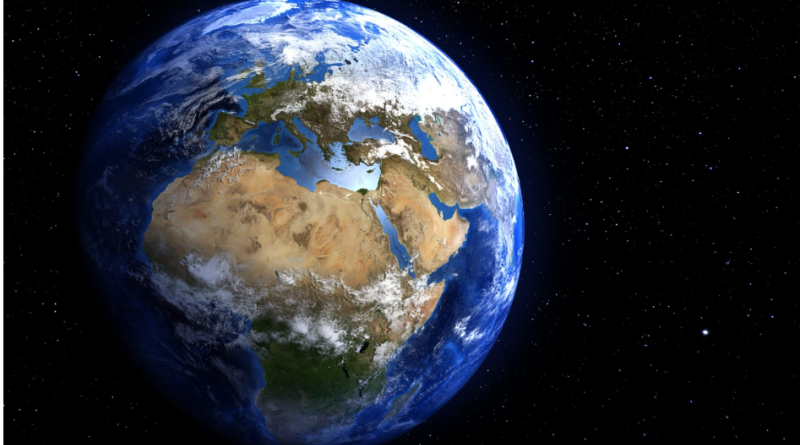
Abu Dhabi-based Space42 and partners are planning to roll out a sophisticated satellite mapping service that covers the entire continent.
Floods that can be tracked as they unfold. Road networks mapped with centimetre-level precision. Ports, power lines, informal settlements and croplands appearing on screen as they shift and expand. A continent-wide live basemap with which African governments can anticipate the impact of extreme weather, design cities with accuracy, and plan agricultural cycles.
Map Africa – a new partnership led by Abu Dhabi’s Space42 with Esri and Microsoft – is the latest attempt to turn these long-standing ambitions into reality. The project aims to build a continuously updated digital map of all 54 African states, positioning geospatial data as a foundation for future growth.
The continent’s mapping ecosystem today is largely the product of fragmented, purpose-specific initiatives. Humanitarian projects such as Missing Maps or Tanzania’s Ramani Huria generated essential datasets for flood risk and informal settlements; while research efforts like AfriPop (later absorbed into WorldPop) tried to fill demographic gaps using satellite imagery. A few governments, notably South Africa, have built national spatial data infrastructures. But these remain isolated cases.
“Africa’s diversity is both its challenge and its greatest opportunity,” says Elmuiz Saad, senior vice president of commercial at Space42.
“Each country has distinct regulatory frameworks, geographies, and market dynamics, which require a partnership-driven model rather than a one-size-fits-all approach.”
In practice, this means fragmented and often outdated base maps, uneven data standards, and limited high-resolution coverage compared to other regions, compounded by rapid urbanisation and informal growth. The regulatory landscape mirrors this fragmentation, with geospatial data governance largely defined at the national level and wide variation in rules on data ownership, licensing, security and cross-border sharing.
Existing solutions are a patchwork: datasets created for individual use-cases, each useful in isolation, but rarely interoperable, regularly updated or scalable across borders.
Institutions such as the United Nations Committee of Experts on Global Geospatial Information Management (UN-GGIM) and the UN Economic Commission for Africa have warned that without a shared continental framework, African countries will struggle to integrate geospatial data into national planning, sustainable development or regional cooperation.
Map Africa thus enters a space where previous attempts have either stalled or operated at limited scale, and where the central challenge is not technological feasibility but continental harmonisation, continuity and local participation.
From satellites to street level
“The mapping process starts in space,” says Yuliya Tarabalka, vice president of Geospatial and Smart Solutions at Space42.
“We use Earth observation satellites to capture images with centimeter-level accuracy, and that level of detail allows us to identify a wide range of features critical for business and development – from road networks to individual buildings. Once captured, AI-driven solutions convert raw imagery into usable map layers: terrain, infrastructure, boundaries, vegetation, and more.”
What is fundamentally different from other map initiatives, aside from the scale of territory it aims to cover, is also the high-level partners involved. Space42 provides the satellite imagery, AI powered mapping automation, and data infrastructure. California-based Esri supplies the software ecosystem for trustworthy mapping and visualization, while leveraging relationships with African governments and international NGOs. Microsoft provides secure cloud architecture through Azure, which hosts and scales the system.
Esri says that Map Africa data will be licensed to national governments, enabling ownership and long-term updating by national mapping agencies. The data will also be offered to private companies.
“Commercialisation is part of the long‑term sustainability model, as the platform’s insights provide clear, cross-sector value,” says Space42. “This includes the telecommunications, insurance, logistics, energy, and agriculture industries, all of which rely on accurate, up‑to‑date geospatial information to operate.”
Over time, the initiative is also intended to “support a new commercial ecosystem of African startups.”
“By making foundational data available, we enable African startups and SMEs to build value‑added services, applications, and solutions, to advance the platform. We envision long‑term impact by creating a sustainable model that supports public‑sector needs while unlocking private‑sector innovation across the continent.”
The backbone of the project is what Yuliya calls ‘centers of excellence’ in selected countries which “will act as hubs for training, validation, and applied research,” and “ensure that African businesses and governments are provided the capability to maintain the maps.”
“The impact across Africa could be huge,” says Yaw Nyarko, professor of economics at New York University (NYU) in Abu Dhabi and director of NYU Africa House and the Center for Technology, Economics and Development.
“We have a large booming young population looking for jobs, and these maps could provide entry level jobs for the young to grow in and expand to other areas while helping the African national economies.”
Nyarko also runs a lands office responsible for 2% of the landmass of Ghana.
“We run our own independent mapping platform with open source software, updating it as and when we can. With the live Africa maps we will eagerly both contribute to our data (painstakingly collected over almost a decade) as well as utilise the sophisticated and AI enabled data from the Map Africa project.”
For an office that already relies on maps to resolve boundary disputes and assist companies in acquiring fair and available land, Nyarko says, “having live maps would revolutionise what we do and how we do it.”
UAE’s expanding tech footprint
Space 42 also aims to facilitate region-wide connection through Thuraya-4, an initiative already present in other countries which delivers secure communications beyond the reach of terrestrial networks across land, sea, and air.
This push fits within a larger surge of Emirati investments in Africa. Between 2019 and 2023, companies from the United Arab Emirates committed more than $110bn to African projects. Of that total, over $70bn reportedly went into green energy and renewable-energy ventures, reflecting the UAE’s growing ambition as a major investor on the continent.
Major Gulf-based firms are increasingly visible in African port, infrastructure, logistics and resource projects. DP World, for example, is among the logistics giants expanding operations in several African ports, while others – including firms affiliated with the Emirati investment group International Holding Company (IHC) – have pursued ventures in mining, infrastructure and broader economic sectors.
The UAE’s footprint in Africa’s high-tech sectors has expanded rapidly over the past five years. Emirati firms have backed digital infrastructure ventures from cloud computing to fintech, often positioning themselves as long-term partners for governments looking to modernise public services. Abu Dhabi’s G42 – an AI and cloud computing conglomerate – has signed cooperation agreements in countries including Kenya and Rwanda on data infrastructure and AI research.
Map Africa: full coverage by 2030?
The announcement of the official memorandum of understanding between Space42, Microsoft, and Esri to enhance mapping capabilities across Africa was made on July 29, 2025, which means the project is in its infancy.
The first two years will focus on foundational mapping and pilot programs across selected countries, followed by regional scaling through the local Centers of Excellence. By the fifth year, in 2030, Map Africa is expected to reach full continental coverage, with each national mapping agency operating its own live base map.
Yuliya Tarabalka says the sectors poised to benefit first are urban development, logistics, agriculture, climate resilience, and national security. She says live basemaps allow ministries to map crop zones and water resources with precision, improve flood modelling and disaster planning, help cities design infrastructure using accurate building and road data, streamline logistics through real-time transport visibility, and strengthen border monitoring with faster emergency responses.
“Traditional maps only show us what existed; live maps reveal what is happening,” she says.
“These insights inform long-term resilience strategies – helping governments prioritise infrastructure investments that deliver the greatest protective impact.”
Cover photo: African Business