

South and Southeast Asian Countries Are Getting Overwhelmed by Storms
Scientists say storms will bring more rain and destruction as climate change accelerates.
An unusually intense series of storms and major cyclones converged in South and Southeast Asia in recent weeks, killing more than 1,600 people since mid-November.
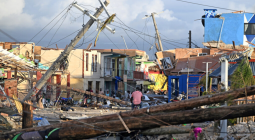
The destruction left behind by the storms in Indonesia, Vietnam, the Philippines, Malaysia, Thailand and Sri Lanka has been staggering. Entire towns inundated by flooding. Millions of displaced people living in cramped shelters across the region, with hundreds still missing. Landslides triggered by the onslaught of rain. And at least $20 billion in damage, early estimates show.
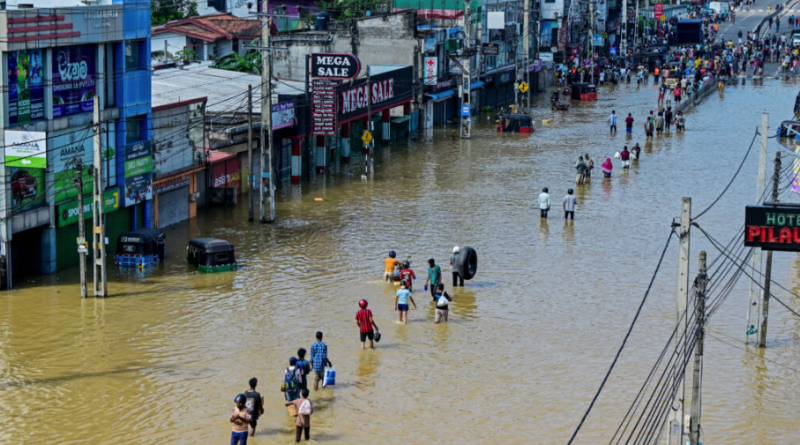
Anura Kumara Dissanayake, the president of Sri Lanka—which bore the brunt of Cyclone Ditwah’s impact at the end of November—called the deadly weather the “largest and most challenging natural disaster in our history.”
Though the storms were partially fueled by natural weather cycles, scientists say that climate change helped supercharge rainfall, a rising trend across South and Southeast Asia, which is warming nearly twice as fast as the global average. At the same time, deforestation and rapid urbanization in the region may have exacerbated flood impacts by uprooting nature’s flood barriers.
Overlapping Storms: Though rainy weather is typical during fall in South and Southeast Asia, the tail end of this “wet season” has been abnormally intense. That’s partially due to the La Niña weather pattern, during which strong trade winds blow more warm water than usual from South America toward Asia.
Scientists have not yet determined the extent of climate change’s influence on these particular storms, but research shows that global warming is making Asia’s monsoon season more extreme and unpredictable because warming ocean temperatures provide more energy for storms, while hotter air holds more moisture.
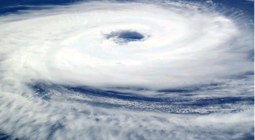
Fueled by these conditions, several overlapping storms collided in mid-November in parts of Asia, wreaking havoc from bustling cities in Southern Thailand to the forests of Sumatra in Indonesia. About 13 inches of rain dumped on the city of Hat Yai in Thailand during a single day in November—the heaviest rainfall in three centuries, the BBC reports. In Sri Lanka, Cyclone Ditwah swept far up the southern coast of the country, which experts say is unusual for this kind of storm system.
“They are wetter and more destructive because the background climate has shifted,” Roxy Koll, a climate scientist at the Indian Institute of Tropical Meteorology, told The Guardian. “Water, not wind, is now the main driver of disaster.”
Nearly 11 million people have been impacted by storms across the region, with roughly 1.2 million displaced, according to United Nations estimates. That includes millions of children in Vietnam, the Philippines, Indonesia, Thailand and Malaysia who have been cut off from access to basic necessities and schools as they stay in evacuation shelters with high health risks due to overcrowding.
“Children are sitting at the frontline of the climate crisis, experiencing firsthand what it means when extreme weather becomes more frequent, more intense, and less predictable,” Ricardo Pires, a U.N. Children’s Fund spokesperson, said in a statement.
Inside Scoop: My colleague Christine Spolar visited Vietnam in November and witnessed the aftermath of the relentless storms. A total of 21 storms, including 15 typhoons, hit Vietnam this year—the highest number since records began in 1961. It’s also 10 more typhoons than the average a few decades ago, a trend that’s at least in part due to climate change, The New York Times reported.
I asked Christine to tell me more about the situation and what she saw while she was visiting:
Central Vietnam was repeatedly doused with heavy rains from typhoons in October and November—just in time for the start of the high tourism season. The ancient cities of Hue and Hoi An, both UNESCO World Heritage sites, notched record volumes of rainfall, and week after week, residents could be seen cleaning streets, markets and riverbanks mired in trash and sludge.
I was the first tourist my guide had in 10 days when I showed up in the city of Hue. In Hoi An, the bicycle tour I booked ended up being a private experience because the other tourists had canceled their trips. There is no private insurance for homes in Vietnam. When I was in Hue, the government called for a citywide volunteer cleanup day—lots of brush and trash was piled high near the river and people hung their clothing, carpets and household goods out to dry.
The sudden severe floods across Southeast Asia are what climate scientists are now calling a new normal. The watery tumult across Southeast Asia occurred during the COP30 global climate conference held in Brazil. Countries there pledged to triple funding for climate adaptation over the next five years—but that is little comfort to governments now facing unprecedented cost and calamity.
A Human-Made Disaster: Destruction from flooding and ensuing landslides has made it difficult for aid to reach some of the hardest-hit communities. In Indonesia’s Aceh province, authorities are struggling to get basic medical care and food to survivors.
“People are not dying from the flood, but from starvation,” Muzakir Manaf, governor of Indonesia’s Aceh province, told reporters on Sunday, according to Al Jazeera.
Environmental groups and local government leaders say that rampant deforestation in Sumatra has left the region especially vulnerable to flooding and landslides, evidenced by the abundance of cut logs swept up in floodwaters, Reuters reports. Indonesia has some of the world’s highest levels of forest loss due to mining, wildfires and palm oil production. Forests can help prevent floods by reducing erosion and blocking runoff, while soil and roots absorb excess water—similar to a sponge.
On Friday, Indonesia’s forestry minister, Raja Juli Antoni, said his office was revoking 20 commercial logging permits, including those in flood-affected areas in Sumatra, Indonesia news agency Antara reported. Roads and pavement also wick off water, which can lead to more severe flooding in urban areas—a problem that cities in the United States also experience as extreme rainfall becomes more common.
Even some of the areas across Vietnam that do not have high levels of deforestation were so oversaturated with rain from earlier storms that the land could not absorb more moisture.
Recent reports indicate that water and power systems across Asia are unprepared for the extreme weather brought by climate change, such as heat, drought and flooding, The Associated Press notes. For example, the strong winds of Typhoon Kalmaegi in Vietnam snapped power lines in the city of Quy Nhon, leaving many without access to electricity or modes of communication.
Asia accounts for 41 percent of global flooding, which frequently overwhelms clean-water reserves. Despite increasing rural water access in recent years, Asian countries still have a long way to go to buffer their water infrastructure against weather threats and pollution. According to a report by the Asian Development Bank, governments are meeting only 40 percent of the $250 billion in annual funding needed to support water and sanitation needs over the next 15 years.
“The amount of infrastructure we’ll build in Asia in the next three decades will be as much as what was built in the last two centuries,” Amit Prothi, director general of New Delhi-based Coalition for Disaster Resilient Infrastructure, told The Associated Press. Prothi, who was not involved in the report, added that the rapid growth across the continent can be seen as an “opportunity to rethink and build in a new way.”
Cover photo: In November, Sri Lanka was hit by the devastating Cyclone Ditwah. Credit: Ishara S. KODIKARA / AFP via Getty Images