

When it makes sense to stop the maintenance and repower the project
Case study on the repowering of wind farms, highlights the importance of data analysis
As global wind farms reach the 15 to 25-year mark of operation, operators have to deal with declining energy yields, higher corrective maintenance costs and regulatory pressures to modernise assets.
Making a decision on whether to completely repower, partially repower or continue operating the wind turbines as-is becomes an easier decision to make if a bankable data-driven assessment can be made, rather than making a guess or a back-of-the-envelope assumption.
GWEC’s Global Wind Energy 2026 report provides case studies on the repowering of wind farms, highlighting the importance of data analysis.
Renewable engineering consultancy Solida assessed an ageing onshore wind farm on the Iberian Peninsula in 2025. The thirty 0.85MW turbines had each been serviced for nearly two decades.
While the wind farm operator had expected some degradation, it was unsure of:
- the magnitude of long-term production losses,
- the root causes (component degradation vs wake effects vs terrain misalignment),
- the site’s suitability for newer turbine models, and
- whether repowering would be economically viable under evolving regulatory frameworks in Spain and Portugal.
-
Supervisory Control and Data Acquisition (SCADA) based diagnostics
The consultancy assessed more than five years of SCADA data collected across the turbines to deliver a fully bankable performance baseline without requiring a new measurement campaign.
The analysis covered
- operational power curve derivation for each turbine,
- normalisation to 100% availability to isolate true performance behaviour,
- long-term correlation with reanalysis datasets to remove interannual variability,
- flow model calibration to identify wake interactions and terrain-induced losses, and
- simulation of modern turbine layouts to evaluate repowering potential.
-
Key highlights that pushed the project to repower
The results highlighted several important trends. Firstly, long-term degradation was much more pronounced than initially assumed, “with capacity factors declining close to 10 percentage points”. This was attributed to a combination of component ageing, blade wear and compounded wake interactions across the site.
Secondly, the original turbine layout—which had been designed based on early-stage resource assessments and older turbine technology— was deemed to be suboptimal under current conditions, “with wake losses significantly higher than expected.”
SCADA analysis revealed “consistent underperformance” in several turbines relative to their original power curves. This suggested “mechanical degradation and alignment issues”.
“It also shows that wake effects had intensified over time, particularly under prevailing wind directions, reducing overall wind farm efficiency. Updated flow modelling indicated that local wind conditions at hub height differed from initial assumptions, reflecting the limitations of early measurement campaigns and reinforcing the value of long-term operational datasets.”
After calibrating the flow model using operational data, the consultancy simulated several modern turbine configurations, assessing:
- wake recovery benefits with taller hub heights,
- Terrain-induced speedup zones,
- extreme wind constraints,
- grid connection limits, and
- permitting boundaries.
-
Even if they were to maintain the existing substation and road infrastructure, the data suggested that the optimal layout would provide a strong improvement in annual energy production.
-
Regulatory window strengthening the business case to repower
The broader policy environment in Europe is shifting in favour of repowering. Several European jurisdictions—including Spain and Portugal—have introduced measures to streamline permitting processes with:
- up to 6 months permitting windows for repowering projects,
- simplified environmental assessments for projects within existing footprints, and
- in some cases, clear end-of-life requirements or repowering plans for older assets.
-
These changes shorten development timelines and reduce uncertainty for asset owners, provided the projects secure a bankable repowering assessment early on in the process.
Through objective, SCADA-based analysis, Solida enabled the windfarm owner to:
- build a bankable understanding of long-term performance trends,
- quantify the upside of modernisation,
- plan repowering in alignment with fast-moving regulatory frameworks, and
- reduce uncertainty before committing to a major investment decision.
-
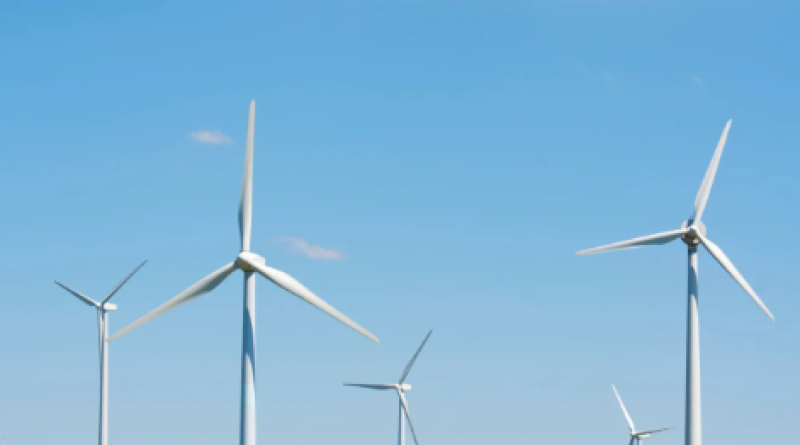
Cover photo: Wind turbines in the hills of Arras in the Navarre region in Spain. Source: pedrosala©123rf