

Why Africa needs solutions for end-of-life wind blades
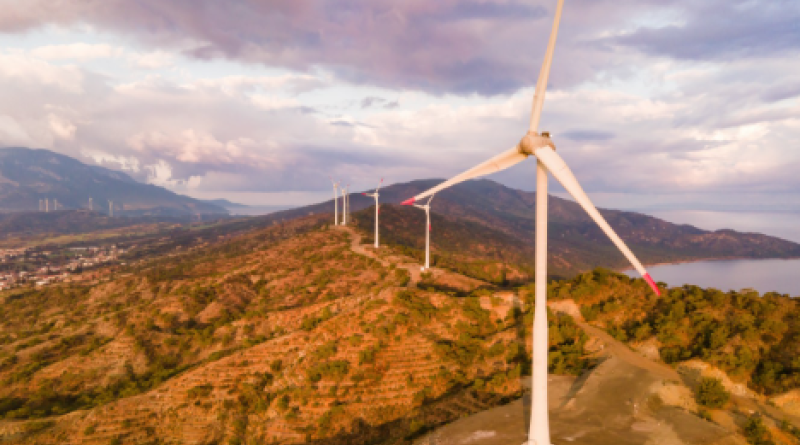
The first wave of African wind farms will begin reaching decommissioning age in the 2030s
Globally, tens of thousands of wind turbine blades will be decommissioned in the next decade. Experts believe that the global forecast for annual turbine blade waste a decade from now will be about 200,000 tonnes.
Turbine blade waste is projected to reach 43 million tonnes by 2050, according to Danish wind turbine manufacturer Vestas.
In Africa, wind capacity is growing fast, particularly in South Africa, Egypt and Morocco which together hold around 86% of the continent’s operational capacity, according to the Global Wind Energy Council (GWEC).
The first wave of African wind farms will begin reaching decommissioning age in the early 2030s. At that point, a critical question will arise: What happens to wind turbine blades once they reach the end of their service life in Africa?
According to Enel Green Power, the majority of wind turbine components are easy to recycle because they are constructed of metal. The recycle rate is expected to be about 85%. However, the wind turbine blades are extremely difficult to recycle due to their size, material composition and a lack of effective recycling techniques.
In its 2024/5 report, GWEC pointed out that as wind capacity expands globally and components such as turbine blades age out, the industry faces a growing end-of-life challenge that must be addressed to sustain the energy transition.
The report identifies the reuse, repurposing, recyclability and recovery of wind farm components, including turbine blades, and the reduction of waste and environmental impacts across the wind project lifecycle, in line with a circular economy approach, as one of the wind sector’s key challenges.
Most decommissioned blades head for the landfill or are mechanically recycled as concrete infill
Plastics fabrication company Southern Africa Polymer Technology states that most decommissioned turbine blades are either landfilled or mechanically recycled into concrete infill.
These strategies, they say, result in low value recovery and do not promote a circular material economy. Mechanical recycling, while practical, is restricted in scale for turbine blades and reclaimed materials frequently degrade, lowering characteristics and compromising economic feasibility.
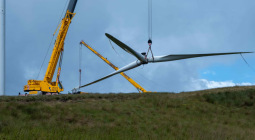
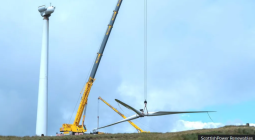
In a 2023 study, Wind Turbine Blade Waste Circularity Coupled with Urban Regeneration: A Conceptual Framework in the journal Energies, experts explain that the blades must be detached from the rest of the wind turbine as a first step in decommissioning and cut into smaller sections before being transported for waste treatment.
The study says that in the waste treatment facility, the blades are treated depending on their intended end-of-life application.
“Currently, the most typical method of dealing with wind blade waste is to discard it in landfills; however, many landfills are saturated, and in some countries, such as Germany, the method has been banned. In addition, material recovery is not possible with this method. The process of pyrolysis can be utilised, where the blades are cut into suitable dimensions and decomposed using conventional heating in an inert atmosphere (450–700°C).”
The paper highlights other newly proposed solutions, including using the blades as thermal insulation or noise-cancelling screens.
In the UK, initiatives such as the DecomBlades project have seen industry and research institutions collaborate to develop sustainable value chains for managing end-of-life wind turbine blades, including decommissioning, reprocessing and recycling for reuse in new applications such as being repurposed in construction as benches or used in cement kilns for energy recovery.
While Europe is piloting coordinated blade recycling and reuse programmes, Africa’s wind sector is still operating without dedicated end-of-life systems, leaving storage and landfill as the most likely outcomes when blades are eventually decommissioned. ESI
Cover photo: leonidsorokin©123rf