

Winners and Losers: Iran War Charts a Brutal, Painful Path to a World Without Oil
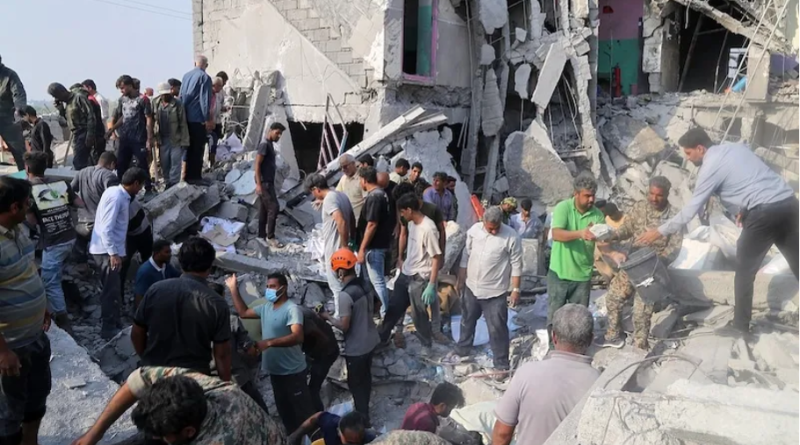
Any war has winners and losers. In this one, Trump is the biggest loser of all. But how many schoolgirls and teachers must die, how much pain and pollution will it take, to break through to the wins?
A week into a brutal, rapidly-metastasizing war that no one needed and almost no one wanted, the perils of the American/Israeli attack on Iran are quickly coming into view.
War has few winners, and they don’t include the children and teachers in a school in Minab, the 1,000+ killed and the many thousands more displaced, or the financially strapped households and businesses paying more for anything that still depends on oil or gas. The windfall profits are flowing to the usual suspects in the fossil industry (we covered this ground just two weeks ago on The Weekender), and the heavy political, economic, and environmental fallout are just beginning.
The last week showed once again that “fossil fuels aren’t a shield against chaos. They are a conduit for it,” our friend at Climate & Capital Media, Peter McKillop, wrote a couple of days ago. “Iran’s daily strikes on Gulf energy infrastructure didn’t just set oil terminals ablaze. They have also torched one of the most persistent myths in modern energy politics: that oil and gas are the irreplaceable foundation of ‘energy security’.”
That thinking is spreading pretty much as fast as the impacts of the war itself. And it points to a likely twist in this dreadful saga that could deliver deeper decarbonization and lower energy bills, brought on by a shift from volatile, geopolitically treacherous, high-carbon fuels to clean, increasingly local electricity that we can count on.
A ‘War of Choice’
Trump’s “war of choice” didn’t have to happen—not with negotiations between the Trump administration and the Iranian regime showing “significant progress” in the hours before America and Israel attacked, according to the Omani foreign minister. “Badr Albusaidi, who was mediating, said the two sides planned to resume negotiations ‘soon’ after consultations in their capitals, and technical-level discussions would take place next week in Vienna,” BBC reported Feb. 26, two days before America and Israel attacked.
Presumably, those room bookings in Vienna were cancelled.
Now, Iran is facing overwhelming firepower from the country that is by far the world’s biggest military spender, with no end in sight. In response, “oil is Iran’s weapon of choice and it is aimed straight at President Trump’s midterm elections,” writes Bjarne Schieldrop, chief commodities analyst at Swedish financial services company Skandinaviska Enskilda Banken AB. “An important part of the battlefield for Iran is thus at the U.S. gasoline pump.”
The Iranian regime is hinging its survival on its ability to quickly spread the pain to a dozen or more countries, and those countries are responding on cue. Saudi Arabia is threatening and Azerbaijan is vowing to join the fight, and a missile aimed at Türkiye briefly opened the possibility that NATO would pile in (Iran quickly denied firing the missile). The overall momentum and tone have some pundits drawing parallels to the First World War—the supposed “war to end all wars” that was meant to be over in a couple of months but finally wound down after four years of hideous destruction, sending maimed survivors home with the seeds of multi-generational trauma.
But there’s one difference that might change everything—not right away, not with a mad dictator in charge in the White House, but by the time it ends.
Four years ago, another well-known mad dictator, Russia’s Vladimir Putin, accelerated Europe’s energy transition by treating the continent’s fossil fuel dependency as a weapon of war. Now, the chaos brought on by America’s and Israel’s war may trigger a cascade of interest in clean, decarbonized energy that the rest of us can count on, coming soon to an electricity system near you.
The most obvious sign so far comes from China, even though it isn’t a 100% clean win: while the world’s first electrostate will be turning to Russia to backfill the 13% of its crude oil imports that come from Iran, China’s “massive investments in clean power” are also “cushioning it from the gas market volatility spurred by the Middle East conflict,” Politico reports.
“The country has definitely pulled all these triggers in the last few years to be prepared for a moment like this,” BloombergNEF Managing Director Ashish Sethia.
But even if the countries of the world can pull off an unintended consequence that Trump never dreamed of, it’s important to understand how we got here. That means looking at who wins (so far) and who loses when a fossil energy war breaks out. And you should be shocked, simply shocked, that the list begins with some of Donald Trump’s closest fossil industry allies.
‘Kissing Trump’s Ring’
Global liquefied natural gas prices skyrocketed this week after Iranian drone attacks prompted Qatar, which accounts for 20% of the world’s LNG supply, to shut down production. U.S. fossil companies are the most obvious beneficiaries.
“The U.S. is the world’s largest exporter of liquefied natural gas,” and “analysts say American suppliers could be in for a windfall as desperate international buyers bid top dollar to secure what fuel is available,” Canary Media reports. “U.S. LNG export terminals are already operating at full bore, so there is unlikely to be a surge in the volume of gas sent abroad—just in the profits firms rake in on each shipment.”
The New York Times connects those dots back to two of the U.S. fossil executives who attended an extraordinary gathering at Mar-a-Lago in April, 2024, where Trump presented what one independent journalist called a “breathtakingly corrupt proposal: If they raised a billion dollars to help him retake the White House, he would roll back any policy they didn’t like when he took office.” Not quite two years later:
• Venture Global LNG CEO Michael Sabel, who donated $1 million to Trump’s inauguration, now says his company likely has “the largest number of available cargoes in the market”. Last week, Venture reported that its LNG sales rose by 181%, its revenue by 177%, and its profits by 53% between 2024 and 2025.
• Cheniere Energy CEO Jack Fusco, who donated $250,000 to a Trump-affiliated political action committee, saw his company’s stock price rise 5.5% Monday, as both Venture and Cheniere set out to “squeeze additional LNG volumes from facilities in Texas and Louisiana and bring more capacity online,” the Financial Times reported.
“The politics here is that it certainly works out well for a handful of people who kissed Trump’s ring at Mar-a-Lago,” Friends of the Earth Deputy Director Lukas Shankar-Ross told the Times.
The Financial Times also points to the independent energy market traders that stand to make a killing from all the killing. “Commodity houses, led by the likes of Vitol, Trafigura, Mercuria, and Gunvor, made extraordinary returns during the COVID-19 pandemic and then after Russia’s full-scale invasion of Ukraine, as global energy markets swung wildly,” the Times writes, citing analysis by McKinsey & Co. “The most successful groups are now reinvesting those profits to cement their position and further expand their market share.”
But over the longer haul, “I wonder what the graph [of spiking LNG prices] will look like when the war ends and Venture Global LNG oversupply, a global LNG supply glut, and the company’s sketchy dealings all collide together,” writes Richard Brooks, climate finance program director at Stand.Earth, on LinkedIn. “Prediction: a significant drop back down in stock prices, a bunch of retail and institutional investors that lose money. And me saying ‘I told you so’.”
Who’s Losing
Beyond the households and communities on the front lines, the biggest casualties in this war are consumers everywhere facing higher costs. And, unexpectedly, the credibility of the industry spin that immediately, reflexively, incessantly translates any global crisis into a demand for new fossil fuel infrastructure.
True to form, it took Alberta Premier Danielle Smith just 48 hours to make her pitch. “Smith says any disruption in the Strait of Hormuz, a key oil choke point at the mouth of the Persian Gulf, only underscores the need for a new pipeline that could bring her province’s pivotal export to Pacific shipping lanes,” The Canadian Press reported.
“We want the conflict to end quickly with minimal loss of life,” Smith said. But “we’re here to help,” and “part of the way in which we can help is, of course, with expansions to the West Coast pipelines,” even though It would take many years to get investors in place and a pipeline built in response to a supply disruption that will (likely) be over in weeks or a couple of months.
Federal Energy Minister Tim Hodgson was quick to echo the point. “We’ve already seen an uptick in inquiries about how quickly Canada can expand its clean and conventional energy exports,” he told CBC, though he acknowledged that “you don’t change the amount of production of LNG or oil in days.”
Even Saskatchewan Finance Minister Jim Reiter, whose province depends heavily on oil and gas, sounds less than keen to count on the fossil economy for a steady stream of revenue. “I think the best contingency we can have in this province is to not rely too much on natural resources,” he said this week.
A week into the war, that over-reliance is already translating into higher costs for the households and business that can least afford to pay more.
“For beleaguered consumers, it’s déjà vu all over again,” writes Jim Stanford, director of the Centre for Future Work, in a Toronto Star opinion piece. “War breaks out on the other side of the world. Within 24 hours, gasoline prices take off—rising 12 cents a litre on average across Canada last week.” Cost increases will follow for gas and oil heating, and services like transportation, food, and construction that depend on petroleum, and “it’ll get worse when the Bank of Canada jumps into the fray with higher interest rates to counteract renewed inflation. Then the victims of oil-fired inflation will be punished again,” just as they were after Russia invaded Ukraine in 2022.
In 2022, Stanford recalls, “world oil prices soared 65% in weeks, propelled unduly by speculative bets placed on financialized futures markets.” Those speculative price hikes accounted for nearly half of the inflation Canada saw after COVID and produced after-tax profits of $154 billion between 2022 and 2024, he writes. Now, Stanford is calling for price regulation and a faster energy transition—not new pipelines or LNG terminals—as the solution for Canadians struggled with affordability.
“The gasoline stored in pumps right now sells for much more than before the war started,” he notes. “But it was refined weeks ago, from oil extracted months ago.”
With oil now above US$90 per barrel and rising, those same price challenges are showing up in the United States, where Politico says the White House is worried. Trump’s chief of staff Susie Wiles “has put out a call to the president’s advisers for ideas on how to lower prices at the pump,” and is “looking under every rock for ideas on improving energy prices, especially gasoline prices,” in the words of one unnamed fossil exec.
“Under every rock except, perhaps, offering tax incentives for electric vehicles, maintaining Biden’s fuel economy requirements, or at least refraining from mocking fuel-efficient cars,” Politico snarks back.
The Biggest Loser
All of which points back to the war’s impulsive and likely clinically demented instigator, Donald Trump, as the big-picture loser as the crisis plays out. Early on, Bill Clinton-era U.S. labour secretary Robert Reich asserted that Trump “hasn’t a f*cking clue what he’s doing,” triggering a volatile regional war with no evidence that Iran was trying to rebuild its nuclear sites, no definition of what he would see as a win, and “no endgame for his war, which may be his undoing.” Within a week, The Associated Press was out with a chronology of the administration’s evolving and conflicting statements on the war, and two authors with The Atlantic had documented 10 different rationales that Trump and others had put forward in the first six days.
“The administration has laid out a buffet of reasons for Operation Epic Fury,” wrote Marie-Rose Sheinerman and Isabel Ruehl. “Take your pick.”
All of it delivered with a callous machismo that has observers cringing. “We expect casualties with something like this,” Trump told NBC News, after three U.S. soldiers were killed in action, “but in the end it’s going to be a great deal for the world.”
Trump’s self-styled “secretary of war”, the former Fox TV host Pete Hegseth, took it farther still. In early media briefings, recounts the Toronto Star’s Andrew Phillips:
Hegseth was hopped up, aggressive, borderline frenzied. He boasted about unleashing “death and destruction from the sky—all day.” Iran’s leadership and military, he said, “are toast and they know it.” And: “This was never meant to be a fair fight, and it’s not a fair fight. We are punching them while they’re down.”
“That’s how fascists describe war,” writes prominent British-American conservative blogger Andrew Sullivan. He points to the “obscenity” of a 43-second White House video, titled Justice the American Way, as “a depraved PR stunt that treats this war as a video game of pure, gleeful, cowardly violence.”
Within days of the first attacks, it was “painfully obvious that Trump and co. had no plan beyond bombing Iran, killing its current leaders, and hoping that something good would happen,” writes Nobel laureate economist Paul Krugman. A week into it, polling averages have the war “already deeply underwater” with American voters, with an average of recent polls showing 50% opposed and just 38% in favour, adds political commentator Taegan Goddard. And meanwhile, a record-fast rise in U.S. energy prices “threatens to hammer an already fragile economy.”
All of this is happening with U.S midterm elections just 239 sleeps away, according to my handy Countdown app. (It’ll be a long, intense slog. But never forget that we started out at 730 days.) Trump’s popularity was already hitting record lows before he started the war, the U.S. economy is “teetering” based on latest job reports, and it’s looking ever less likely that this international crisis will serve its political purpose: distracting from Trump’s failures at home and the constant drip of allegations around the Jeffrey Epstein scandal.
The Win for the Rest of Us
Meanwhile, much of the rest of the world is moving on. The story so far tells us that fossil fuels are already less important in the global economy than they were during past oil shocks. And countries from South Korea to the United Kingdom to Africa are taking away the same lesson Europeans drew from Putin’s aggression: they must never again be so dependent on such a geopolitically hazardous energy source, especially when something less expensive, more reliable, and less climate-polluting is theirs for the asking.
Yes, oil and gas prices are rising fast, and news reports are sounding the alarm. “But the move still pales beside historic oil shocks,” the Financial Times wrote earlier in the week. “The 1973-74 Arab oil embargo saw prices surge by 260%; the upheaval following Iran’s 1979 revolution drove a jump of roughly 160%; and Iraq’s invasion of Kuwait in 1990 triggered an increase of about 180%. Each episode had an impact on the global economy far beyond the energy sector.”
But this time, “the world has changed. Developed economies are far less oil-intensive than they were in the 1970s, and much less dependent on oil from the Middle East.” While the Times cites the U.S., Guyana, Brazil, and Canada as oil producers that offer alternatives to Gulf state producers, the real opportunity is to do anything but trade dependency on one overseas supplier for dependency on another one.
In another post for the Times, economist Alan Beattie lays out the stark choice for any country that imports fossil fuels.
For governments outside the U.S. and China, particularly low- and middle-income countries, the competing economic superpower offers are now as follows. From the U.S., you get forced into trade deals promising a future of burning fossil fuels whose price is subject to wildly destructive U.S. adventurism. From China, you get reliably cheap EVs and green tech to generate renewables. Admittedly these come with other forms of economic coercion attached, such as controls on rare earth minerals, but at least they don’t deliver juddering shocks to growth.
The Change is Happening
All of which goes a long way toward explaining why:
• South Korean President Lee Jae Myung is arguing that his country “should not merely endure the recent global oil price surge and fossil fuel supply chain crisis—triggered by the Iran situation—but instead use this as a pivotal moment to completely overhaul its national energy structure,” the Chosun Daily reports.
“I think this would be a good opportunity to swiftly and extensively transition to renewable energy,” he said.
• UK Business Secretary Peter Kyle announced that the country would accelerate its net-zero strategy, emphasizing “that accelerating the deployment of renewable energy technologies, such as offshore wind and solar power, will help reduce Britain’s reliance on oil and gas imports from politically unstable regions,” London Loves Business writes.
“Doubling down on renewables is, yes, right for climate change, it’s, yes, right for jobs,” Kyle said. “It is also essential because we keep on seeing these lived examples of how instability, through regional instability, is creeping into our energy prices, for which the British government has no agency.”
• Energy Transition Africa says the first attacks on Iran changed the continent’s transition debate overnight. “The first alert didn’t come from a climate report, but from the market,” the organization recounts, with crude oil prices surging on even the possibility that Middle East shipments would be disrupted.
The week’s events have African governments and investors “once again prioritizing a question that climate narratives sometimes treat as secondary,” the independent media platfom adds: “Can an energy system keep functioning under geopolitical stress? The shift is subtle but decisive: transition is increasingly framed as security-aware electrification, not only climate-aligned decarbonization.”
The common factor across all three examples is what Pavel Molchanov, a managing director at the investment bank Raymond James, explained to E&E News.
“Renewables offer a fundamentally lower level of commodity risk compared to imports of fossil fuels, and reminders of that benefit can boost stocks in that industry,” he said. That was already true before the war, but now the economic arguments for renewable energy are “better today than they were 72 hours ago,” a reality that “also feeds into investor appetite for clean energy stocks.”
Which means that, in 2026 as in 2022, two of the most powerful arguments driving a faster transition off fossil fuels are economic and geopolitical.
“Volatility in markets creates huge, unexpected costs in all countries, but especially in developing countries that don’t have the scarce foreign capital to pay 20 to 40% higher prices overnight,” Johns Hopkins University political scientist Bentley Allan writes on LinkedIn. “In the past these countries had no choice but to pay up or cut energy use. Today they have a third option offered by renewable energy.”
Which means that, because of this war, ‘the very countries that are supposed to carry global fossil fuel demand over the next half century will accelerate their plans to reduce oil and gas consumption.”
Cover photo: Agency under Creative Commons Attribution 4.0 International/via wikimedia commons