‘Almost two thirds of Africa’s new renewables capacity will be used to power green hydrogen export projects’: analyst
Electrolysis projects targeting European markets are hindering efforts to provide energy access across African continent, says Global Energy Monitor
Almost two-thirds of large-scale wind and solar capacity planned in Africa is earmarked for green hydrogen export projects targeting European markets, according to not-for-profit data analyst Global Energy Monitor (GEM).
This means that this much-needed renewable energy capacity will not be used domestically, “hindering efforts to provide energy access for all across the continent”, the analyst warned.
GEM has tracked about 350GW of prospective utility-scale wind and solar capacity in the works in Africa — ie, announced, in active development or under construction — roughly ten times the capacity currentlyin operation across the continent.
However 61% of this is planned to power electrolysers in green hydrogen projects, where the molecules are ultimately destined for industrial and energy applications in Europe.
In total, 216GW of wind and solar capacity is earmarked for consumption in this way, across 35 projects in Botswana, Djibouti, Egypt, Kenya, Mauritania, Morocco, Mozambique, Namibia, South Africa and The Gambia.
“These projects, sometimes hundreds of times larger than the host country’s current wind and solar capacity, pull investment and resources from international decarbonisation efforts, like the goal of tripling of renewables by 2030 that was agreed at COP28,” said GEM in its new report, Europe’s push for hydrogen diverts solar and wind potential from Africa.
“They also pull resources from projects on the other end of the spectrum that can have immediate positive impacts, with projects as small as 50kW (0.00005GW) holding the potential to increase local household incomes by two-thirds.”
In Mauritania, 100% of all new wind and solar projects (79.5GW) are attached to green hydrogen proposals.
Meanwhile, Mozambique and Djibouti are being touted to host 12GW and 10GW of green hydrogen-related wind and solar capacity.
At present, Mauritania has just 300MW of renewables capacity in operation, while Mozambique and Djibouti have just 100MW and 60MW respectively.
“If the 12GW project in Mozambique was instead used to provide electricity, it would double the amount of power the country is currently generating,” GEM said. “With its much smaller population, Djibouti could have equivalent per capita electricity consumption to Europe with just 3GW of wind and solar.”
GEM also cast doubt on the ability of green hydrogen developers in Africa — 65% of whom are European — to actually bring their projects to fruition.
“European companies and governments backing green hydrogen on the continent need to be transparent about the gamble they are taking,” said Julie Macuga, researcher at GEM. “Where hydrogen projects are proposed, people should have the autonomy to decide what types of energy and exports are best suited for them.
“Small, distributed wind and solar projects have proven effective in addressing energy access in Africa, with millions benefiting from these projects. Hydrogen remains largely hypothetical.”
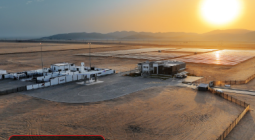
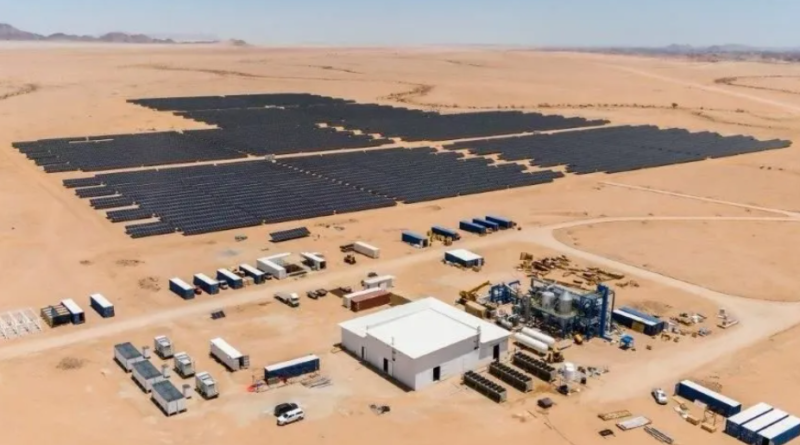
Cover photo: The HyIron Oshivela complex in Namibia, one of the few green hydrogen projects in Africa to have started operationsPhoto: HyIron