

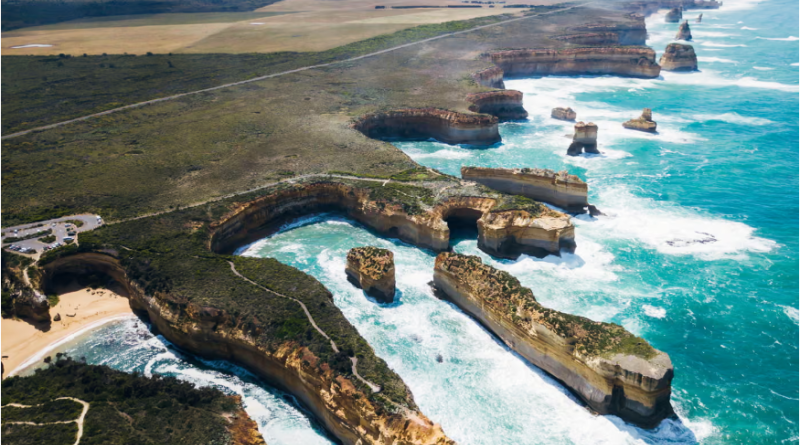
Dr Erich Fitzgerald, senior curator of vertebrate palaeontology at Museums Victoria Research Institute, said the Apostles’ rocks were forming during a time of major environmental change. Known as the Middle Miocene Climatic Transition, it was “a slide into proper sustained global cooling”, setting the scene for what would later become the Ice Ages, he said.
As clays, muds and limestones were forming the Apostles, seas were higher and brimming with plankton and a diversity of ocean life. “Sharks were never larger, never had it better,” he said. “That is the peak reign of the gigantic mega-tooth shark, megalodon, for example.”
Fitzgerald, who was not involved in the study, said it was an important paper, “bookending” the age of the Twelve Apostles and the cliffs opposite in geological time.
“When we are trying to understand critical events in the history of our planet, and the evolution of the Earth – its environment, and, of course, all the organisms, all the animals and plants in it – there is one thing that we really have to get a good handle on to understand that – and that is dating it.
“Despite, you know, more than 100 years of scientific inquiry by geologists and palaeontologists, what this highlights is how much we are still learning and still have to learn about even the most famous and heavily visited and recognisable natural features in the state of Victoria.”