

Nuclear energy jobs rise but skills shortages threaten new builds
The International Energy Agency’s (IEA) World Energy Employment 2025 report points out that nuclear investment increased by 6% in 2024
Global nuclear employment rose to 1.2 million jobs in 2024, up 6% year-on-year, as investment in the sector continued to recover after years of stagnation. However, a growing shortage of skilled workers is emerging as a major constraint on the pace and cost of new nuclear projects worldwide.
Princess Mthombeni, the Founder of Africa4Nuclear, spoke to ESI Africa on the sidelines of the World Atomic Week in Moscow earlier this year. She stressed the importance of the event as well as why nuclear energy is crucial to Africa
The International Energy Agency’s (IEA) World Energy Employment 2025 report points out that nuclear investment increased by 6% in 2024 and is now 50% higher than five years ago, driven largely by China’s rapid reactor construction programme. By contrast, Europe’s investment has declined steadily since 2022, falling from $26 billion to $16bn by 2024.
The US, France, China and Russia remain the four dominant nuclear energy nations, operating a combined 244 reactors – more than the rest of the world combined.
Yet the geographical distribution of nuclear employment differs markedly from operating capacity, with most jobs concentrated not in plant operations but in manufacturing and construction.
Jobs breakdown in nuclear sector
The report notes that only about 30% of global nuclear jobs are tied to operating and maintaining existing plants, while the majority are in plant construction and equipment manufacturing.
China continues to dominate new-build activity, with its nuclear construction workforce expanding by more than 20% in 2024 to around 76,000 workers. The country currently has 29 reactors under construction in 2025 and has strengthened its position as a global supplier of nuclear components.
Manufacturing accounts for 50% of China’s nuclear employment, compared with a global average of 38%.
In North America and Europe, by contrast, nuclear employment is heavily skewed towards operation and maintenance, which accounts for more than half of the workforce as new-build activity remains relatively subdued.
With 63 new reactors already under construction worldwide and investment expected to rise further, the IEA projects that nuclear employment will increase in all of its outlook scenarios through 2035.
Growth is expected at compound annual rates of 1.5% under the IEA’s Current Policies Scenario, 2% under the Stated Policies Scenario and 6% under the Net Zero Emissions Scenario.
However, labour shortages are already constraining progress.
Skills needed in nuclear
Around 46% of nuclear companies surveyed by the IEA reported hiring difficulties that are causing operational bottlenecks, project delays, longer lead times and greater reliance on contractors.
Engineers were identified as the most acute bottleneck, followed by project managers, electrical trades and critical construction skills such as welding and pipefitting.
Some companies reported resorting to long-distance deployment of workers across regions, raising project costs by 10% to 20% in certain cases and underlining the direct link between skills shortages and rising nuclear construction costs.
An ageing workforce is a key driver of the skills gap.
The Global Energy Talent Index estimates that 25% of the current global nuclear workforce is over the age of 55, compared with 20% in oil and gas and just 10% in the renewable energy sector. In France, the nuclear trade association Gifen estimates that of the 100,000 additional full-time nuclear workers needed over the next decade, half will be required simply to replace those retiring.
In the US, 60% of nuclear workers are aged between 30 and 54, a higher proportion than in both the wider energy workforce and the national labour market.
Training in nuclear needs to be ramped up
Competition for skilled labour is also intensifying. Nearly 60% of nuclear companies surveyed reported facing high or very high competition for workers, particularly from other nuclear firms, the oil and gas sector, technology companies and government agencies.
While nuclear roles tend to be highly technical, more unionised and offer average wages around 50% higher than other forms of electricity generation, companies say shortages persist.
The IEA warns that collaboration between industry and education remains insufficient. About 60% of nuclear companies said that cooperation with training institutions is inadequate, while a similar share of skills is currently acquired through on-the-job training rather than formal education.
Some countries are beginning to respond – France’s Mon Avenir dans le Nucléaire initiative brings together government, industry and training providers to raise awareness, standardise training pathways and improve job placement for young professionals.
Artificial intelligence (AI) is also being deployed selectively to support operations. In Japan, AI tools are being used for safety inspections and plant maintenance amid a shrinking workforce.
However, broader adoption remains constrained by strict safety regulations and concerns over data protection, privacy and cybersecurity.
Nuclear energy development gathers pace in Africa
Against this global backdrop, nuclear interest is also rising in Africa.
In July, ESI Africa reported that 22 African countries have expressed interest in nuclear power at various stages of programme development.
The International Atomic Energy Agency (IAEA) report, Outlook for Nuclear Energy in Africa, commissioned by South Africa in its capacity as the 2025 G20 Presidency chair, projects significant growth in the continent’s electricity demand by 2050, creating an opportunity for nuclear as a baseload power source.
“Of the approximately 55 countries that have expressed interest in nuclear power and that are at various stages of considering or embarking on their first nuclear power programmes, twenty-two are in Africa,” the report notes.
Under the IAEA Milestones Approach, 10 African countries are currently in the decision-making phase for nuclear power, four have already taken a formal decision or are actively preparing to do so, and eight remain at an early consideration stage. The agency says it is actively supporting newcomer countries.
Africa crucial to nuclear industry
In a high-growth scenario, Africa’s nuclear capacity could triple by 2030 and increase tenfold by 2050, requiring investment of more than S100bn. Even in a low-growth case, capacity could double by 2030 and increase fivefold by mid-century.
The IAEA also highlights Africa’s role in the upstream fuel cycle, with at least 14% of global uranium production coming from African countries.
South Africa’s established nuclear supply chain is cited as a potential model for the region, with innovative financing structures and regional cooperation seen as critical to unlocking future investment.
As nuclear power regains momentum globally, the IEA warns that resolving workforce constraints will be as decisive as capital investment in determining whether ambitious new-build programmes can be delivered on time and at cost.
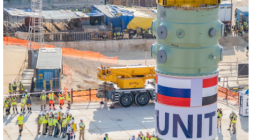
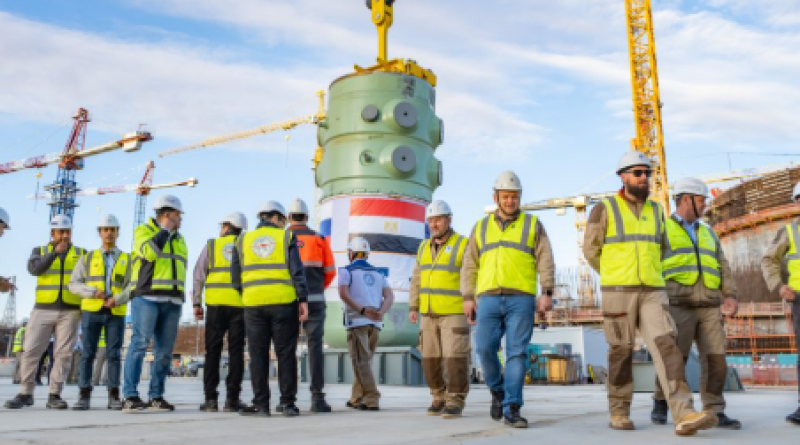
Cover photo: Last September, Egypt’s Ministry of Manpower announced the availability of 6,200 job opportunities for the country’s youth across various specialisations within the El-Dabaa nuclear energy plant project in the Matrouh Governorate. Source: Rosatom