

Planting trees in the sea could act as a huge carbon sink and save millions of dollars in storm damage every year. What is stopping us from doing it?
A new study reveals restoring mangroves could save $800 million in storm damage, protect 140,000 people from flooding, and remove almost triple the amount of CO2 produced by cars in the U.S. every year.
Planting trees along coastlines with human-made shore defenses, such as dikes, could protect more than 140,000 people from flooding and save up to $800 million from flood damage globally each year, a new study finds.
Places that have mangroves, such as parts of Florida, are better able to withstand the ravages of storms and their powerful waves. But although there is a push to restore mangroves around the world, there are several challenges.
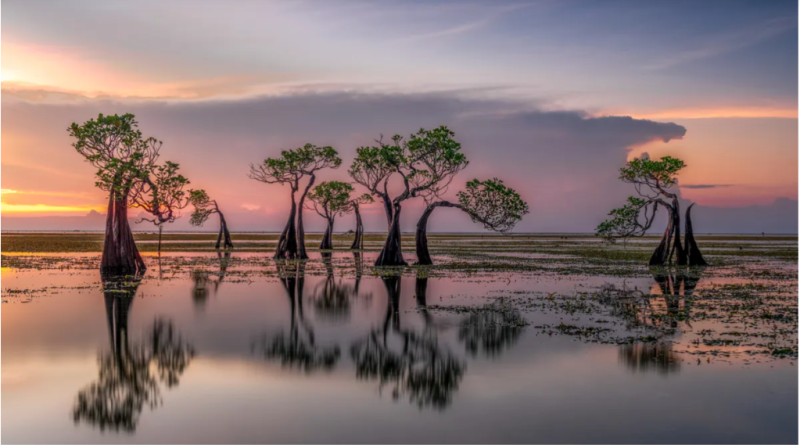
Mangroves are forests that exist in the intertidal zone between the ocean and land. Their trees can live in the salty water, and they are found in tropical and subtropical coastal zones.
Climate change is expected to make hurricanes more frequent, and rising sea levels will drive higher storm surges. Mangroves protect communities and infrastructure from these surges.
They could also help to combat climate change. A 2025 study found that restoring 1.1 million hectares (2.7 million acres) of mangroves globally would remove about 0.93 gigatons of carbon dioxide from the atmosphere. That's almost triple the emissions from cars in the U.S. It would cost about $10.73 billion to restore those mangroves, according to the study.
Cover photo: Mangrove restoration could help save millions in storm damage, a new study shots. (Image credit: Mr. Banyat Manakijlap via Getty Images)