Forget talk about elections and democracy in Venezuela. TheTrump administrationhas a simple goal there: Back a pro-U.S. government — andprop it upwith millions of barrels of Venezuelan oil.
Why it matters:The plan hinges on the U.S. taking de facto control of oil production in Venezuela, which has the largest crude reserves in the world but has been crippled by the twin forces of kleptocracy and U.S. sanctions.
Such a raw exercise of U.S. imperial force hasn't been seen in modern times. It became clear Saturday with the seizure of Venezuela's leader,Nicolas Maduro, for alleged drug trafficking.
Driving the news:President TrumpannouncedTuesday on Truth Social that the U.S. would receive as many as 50 million barrels of sanctioned oil from Venezuela, worth about $2.5 billion. Venezuela would share in the profits from the sale, Trump said.
On Friday, Trump plans tomeetwith a dozen oil executives in the White House to discuss boosting Venezuelan oil production.
Meanwhile, Secretary of State Marco Rubio is pressuring Venezuela's acting president, Delcy Rodriguez, to kick suspected intelligence officials from China, Cuba, Iran and Russia out of Venezuela.
Zoom in:Trump's Tuesday announcement came at a crucial time for Venezuela's petrol-funded government. It's teetering on economic collapse, partly because of a U.S. blockade of most oil tankers leaving the country, sent there to pressure Maduro to leave office.
In Sunday show interviews and private conversations with Congress, Rubio talked openly about how Venezuela's economic woes were "leverage" for the U.S. to force the socialist regime to open its markets.
"We need to get the oil flowing out and the money going back to Venezuela without it getting stolen," a senior administration official told Axios. "It's no easy task."
Between the lines:An anti-communist Cuban-American lawmaker from Miami, Rubio has been an outspoken proponent of bringing democracy to socialist regimes such as those in Venezuela and Cuba.
But in Trump's government, realpolitik, brute force and national interests are supreme.
That doesn't necessarily mean the administration won't eventually call for elections in Venezuela.
"There will be elections at the right time, but [Trump's] top priority is to bring Venezuela back from the dead and rebuild the country," another White House official told Axios.
The intrigue: The toppling of Maduro was a surgical strike that left the rest of his socialist regime in place in Caracas, an effort to keep it stable. Some members of Venezuela's opposition have continued to press for fair elections after widespread voter fraud has kept Maduro in power.
"We needed a leader, someone in government who knew how to keep the lights on. And that's Delcy Rodriguez," the senior Trump administration official said. "It's not that she wants to play ball — she has to play ball. And she knows it."
Joining Rodriguez, who was Maduro's vice president, is her brother, National Assembly President Jorge Rodriguez; the head of the security services, Diosdado Cabello; and the head of the military, Vladimir Padrino López.
Reality check:Venezuela has been a U.S. adversary for more than two decades, and analysts say Trump's announcement that the U.S. would receive 30 million to 50 million barrels of Venezuelan oil might pose domestic political problems for Delcy Rodriguez, who could have a tenuous grip on power.
In socialist Venezuela — where Maduro's predecessor, Hugo Chavez, survived a2002 coup attempt linkedto the Bush administration— it's popular to bash the U.S. as a colonial bully.
By the numbers:Under Chavez, who expropriated the assets of Exxon Mobil and ConocoPhillips and drove them out of the country, Venezuelan oil production decreased from about 3.5 million barrels daily to 2.8 milliona day in 2013, when he died.
Under Maduro, production fell to about 800,000 barrels daily. He gave about 15 million barrels a year to Cuba for free and has sold discounted oil to Russia and China.
Venezuela has about 30 million barrels of oil stored on land and about 16 million more barrels on tankers in its waters, according Tankertrackers.com, a firm that monitors shipping.
What they're saying:Trump administration advisers say the president has a chance to reframe the U.S. relationship with Venezuela's people by making it clear they'll benefit with Maduro gone.
Trump — who's responded, "Me," when he was asked who controls Venezuela's oil, "needs to stop sounding like he's just taking their oil," one adviser said.
"The [Maduro] regime was stealing oil and sending it for free to Cuba. None of that money was going to help Venezuelans."
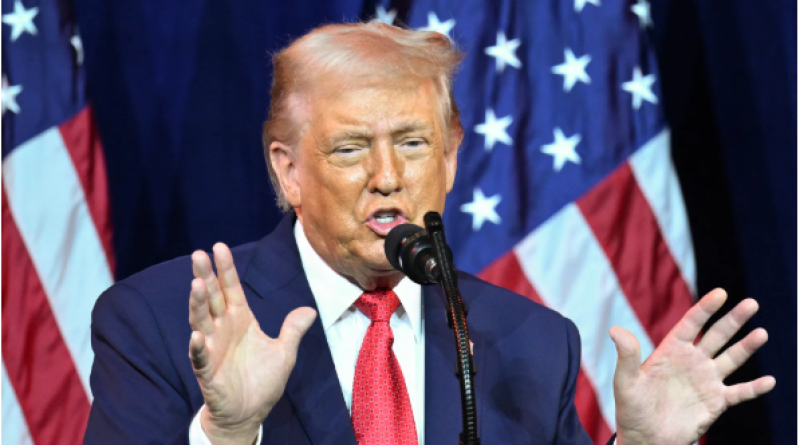
Cover photo: President Trump speaks to House Republicans on Tuesday. Photo: Mandel Ngan/AFP via Getty Images

 © Copyright 2019. All Rights Reserved.
 Maintenance & Support