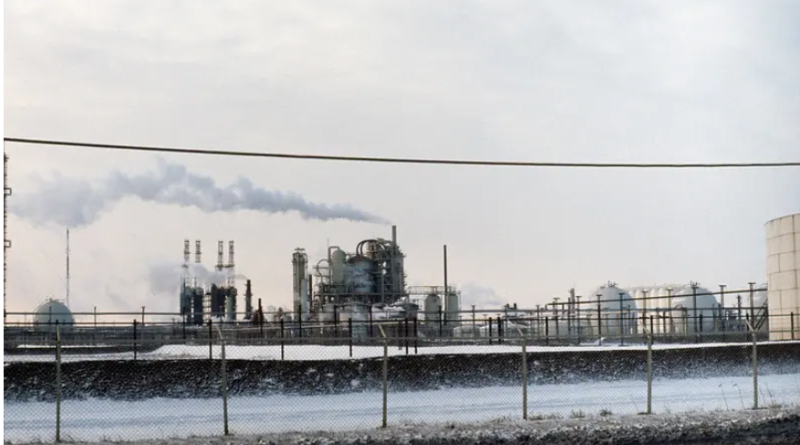
Despite many years of international sanctions and poor maintenance of its oilfield infrastructure, “some oil industry analysts believe Venezuela could double or triple its current output of about 1.1 million barrels of oil a day and return the nation to historic production levels relatively quickly,” AP adds. “If or when that would happen, however, is more complex. Many energy analysts see a longer and more difficult road ahead.”
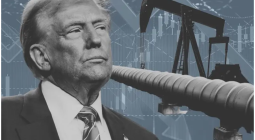
Bloomberg opinion columnist Javier Blas says Trump has set out to build “his very own oil empire,” with political sway over available reserves in the U.S., Latin America, and Canada. “Like it or not, all of them are living under the ‘Donroe Doctrine’—an increasingly belligerent Washington’s sphere of influence over the Americas,” he writes. “Together they account for nearly 40% of the world’s oil output” and 20% of global reserves, giving him “an economic and geopolitical lever no U.S. president has had since Franklin D. Roosevelt in the 1940s.”
Citing two sources from outside that sphere of influence, a U.S.-sanctioned Russian oligarch and a Kremlin envoy, Blas opines that “having de facto control of the Western Hemisphere’s petroleum wealth is a geopolitical game changer. For decades, U.S. military adventurism was constrained by the impact of any war on energy costs. Today the White House has primacy over oil-producing allies and adversaries alike—whether it’s Saudi Arabia or Iran, Nigeria or Russia.”
Fossils May Not Play Along
But not all analysts agree that U.S. fossil companies are likely to play along.
“For weeks, Trump has been courting oil companies, promising them a glorious return to Venezuela,” after the country “seized private assets decades ago in its push to nationalize the petroleum industry,” Politico Power Switch writes. The Maduro/Flores kidnapping “comes as a down payment of sorts to the industry—though not necessarily one that the U.S. oil majors are eager to collect.”
U.S. fossils have “longed” to re-establish their operations in petrostate Venezuela, Politico says, and Trump cabinet secretaries Chris Wright and Doug Burgum are now arm-twisting them to do just that. But “rebuilding decayed oil fields in a still socialist-led country amid a global oil glut is few people’s idea of a good time,” the news analysis states. “It’s likewise unclear how the U.S. would guarantee the safety of employees and equipment, how companies would be paid, and whether oil prices will rise enough to make Venezuelan crude profitable.”
Moreover, as the global oil industry “continues to stare down the prospect of a broad transition to renewable energy,” it’s “not obvious that future markets can justify a surge of investment in Venezuela,” says Grist staff writer Jake Bittle. “While there are buyers for additional oil that could be pumped in Venezuela—some of them on the U.S. Gulf Coast—experts say a total revival on the order that Trump is promising may not be in the cards.”
The market for heavy oil from Venezuela (or from Alberta, for that matter) is limited, and while analysts have different ideas about when global oil demand will start to decline, they mostly agree that the peak is coming, Bittle writes. “At that point, there may no longer be sufficient demand to keep exploiting new oil fields, no matter how large. And given that it will take many years just to update the infrastructure that will allow for increased oil production in Venezuela in the first place, investors may decide that the juice is not worth the squeeze.”
‘Northwards of $100 Billion’
On LinkedIn Monday, Patrick Galey, head of fossil fuel investigations at Global Witness, said it would cost “northwards of $100 billion just to get Venezuelan output back up to two million barrels per day (still less than half of Texas’ daily production). And the only player still there, Chevron, is notoriously cost averse these days.”
More likely, Galey adds, “this is a play to boost oil prices at a time when the world faces a 3.8-million-barrel-per-day oversupply (yes, really) of a product, demand for which is in terminal decline and U.S. production productivity of which has been trending downwards for a while now.”
Maria Pastukhova, programme lead, global energy transition at the London- and Brussels-based E3G energy transition think tank, agreed that restoring Venezuela’s oil infrastructure would be “slow, expensive, and risky” at a time when “the global oil market is well supplied, demand growth is fading, and China is signalling an approaching demand peak.” That means “control over Venezuelan oil is less about adding supply and more about geopolitical optionality. A U.S.-aligned Venezuela is unlikely to unleash a wave of new production, but it would significantly reduce access for China, Russia, and Iran, weakening their geopolitical leverage.”
Small wonder that the loss of a key ally had China strongly condemning the U.S. action Saturday. In a foreign ministry statement, Beijing said it was “deeply shocked by and strongly condemns the U.S.’s blatant use of force against a sovereign state,” the Globe and Mail reports. China described the raid and kidnapping as “hegemonic acts” that “threaten peace and security in Latin America and the Caribbean region.”
Trump’s Emerging Doctrine: ‘Strike, Then Coerce’
Over the last 72 hours, multiple analysts have cast Trump’s action as tangible proof of a new geopolitical doctrine. The raid in Caracas “capped a month of aggressive military action by Trump that also included targeting alleged extremists in northern Nigeria, attacking Islamic State militants in Syria, and threatening to restrike Iran,” the Wall Street Journal reports—not to mention repeated, controversial air strikes on fishing boats alleged to be carrying drugs in the Caribbean Sea and East Pacific Ocean.
“The flurry of military moves underscored Trump’s reliance on the surprise use of force during his second term,” the WSJ adds, “an emerging doctrine to strike and then coerce that is likely to be sorely tested as the White House seeks to press Venezuela and other countries he targets to comply with his demands.”
Within not many hours, Trump was threatening additional targets, including Colombian President Gustavo Petro, Cuba, Mexico, and Greenland. Over the weekend, he claimed Cuba “is in a lot of trouble,” while the U.S. “needs” Greenland for the sake of national security.
Trump’s statements had Mexican President and former IPCC scientist Claudia Sheinbaum categorically rejecting the U.S. intervention. “Unilateral action and invasion cannot be the basis for international relations in the 21st century,” she said in a three-page statement Monday. “They lead neither to peace nor to development.”
In Copenhagen, Greenlandic Prime Minister Jens-Frederik Nielsen and Danish Prime Minister Mette Frederiksen told Trump to stop threatening a takeover of Greenland, with Frederiksen warning that an attack on the semi-autonomous Danish territory would mean an end to the NATO military alliance.
“If the United States chooses to attack another NATO country militarily, then everything stops,” she told Danish TV Monday. “That is, including our NATO and thus the security that has been provided since the end of the Second World War.”
Related Story: Lesson from Venezuela: Carney Must Make 2026 the Year of Real Security
Canada’s former UN ambassador Bob Rae told CBC there’s “absolutely no room for complacency” in Ottawa’s response to the attack, adding that Trump claiming ownership over the entire Western Hemisphere amounts to “nonsensical” overreach.
“What the hell is this?” he asked. “You can’t unilaterally declare that you have unique jurisdiction over an entire half of the world, and all the people who live in that half of the world just have to put up or shut up.”
But Prime Minister Mark Carney’s statement Saturday was far more cautious, leading with a critique of Maduro’s “brutally oppressive and criminal regime” before calling for a “peaceful, negotiated, and Venezuelan-led transition process” that respects the democratic will of the country.
“In keeping with our long-standing commitment to upholding the rule of law, sovereignty, and human rights, Canada calls on all parties to respect international law,” Carney said. “We stand by the Venezuelan people’s sovereign right to decide and build their own future in a peaceful and democratic society.”
With Carney meeting European and British leaders in Paris to discuss security guarantees for Ukraine, foreign policy experts are urging the countries to “send a strong signal” against Trump’s action, the Globe and Mail reports.
“If we’re seen as condoning this, it’s giving a hunting licence to Putin and quite frankly Xi when it comes to Taiwan,” said Fen Hampson, chancellor’s professor and professor of international affairs at Carleton University. “It is not in our interest to revert to the law of the jungle, and it is not in the interests of the other countries that are meeting in Paris to revert to the law of the jungle. It’s time to send a message to Washington: We don’t like this.”
“There’s safety in numbers” for western leaders to defend “fundamental principles such as sovereignty, international law, and the non-use of force, unless there’s a credible reason, including self-defence, to intervene militarily in another country’s affairs,” agreed international affairs professor Roland Paris, director of the Graduate School of Public and International Affairs at the University of Ottawa.