

Wind sector will need 628,000 workers by 2030 – GWEC
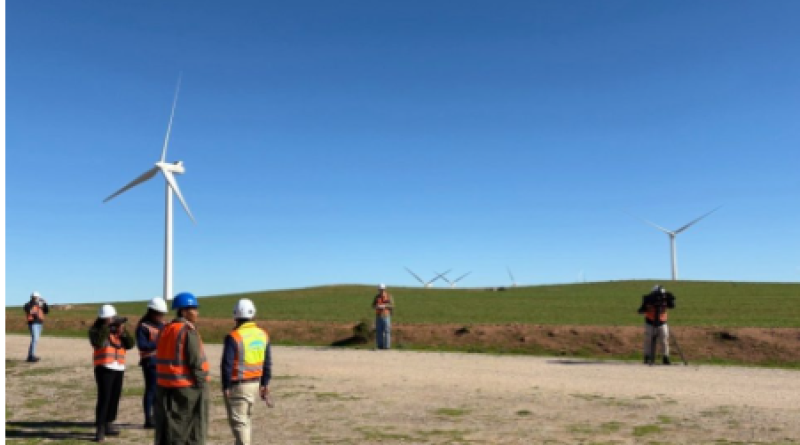
GWEC CEO Ben Backwell said the organisation alongside the Global Wind Organisation (GWO) are calling for urgent action to address the workforce shortage and scale up installation capability
The global wind industry will require around 628,000 technicians by 2030 as new capacity surges and the world’s installed fleet expands. This is the projection as mapped out in the Global Wind Energy Council’s (GWEC) Global Wind Workforce Outlook 2025–2030 report.
Factors driving job numbers projection
The new GWEC report finds that accelerating wind deployment between 2025 and 2030 will place mounting pressure on Construction & Installation (C&I) and Operations & Maintenance (O&M) workforces, with O&M forming a steadily growing share of total labour demand as turbine fleets expand and age.
The report identifies O&M growth as being driven by:
- the expanding size of the global operating fleet,
- the rising complexity of wind turbine systems,
- the need for routine inspections repairs and troubleshooting, and
- the importance of maintaining safety and performance standards.
“By 2030, approximately 628,000 professionals will be required to meet industry needs. This growth is particularly pronounced in the operation and maintenance portion of the wind energy value chain, where the surge in workforce demand reflects an evolving need for higher and more diverse skill sets to service and maintain the world’s 2.1 TW wind fleet.
“Consequently, this trend raises critical questions for the industry regarding talent availability, skill development and workforce readiness,” says the report.
Challenges in 6 major wind markets
Global cumulative wind capacity is expected to reach about 2,117GW by 2030, with nearly 982GW of new capacity added between 2025 and 2030. Technician numbers are projected to reach 493,000 by 2026 before exceeding the projected 628,000 by the end of the decade.
GWEC examined six countries for this edition of the report: US, India, Brazil, Germany, France and Australia – which “represent a wide range of market conditions.”
Each faces distinct workforce challenges:
US: rapid onshore growth and the emergence (albeit uncertain) of offshore wind increase demand across both C&I and O&M.
India: deployment growth requires major scaling of training infrastructure.
Brazil: strong O&M demand and a need for upskilling in line with turbine modernisation.
Germany and France: mature markets with ageing workforces and growing O&M loads.
Australia: fast-growing onshore markets with significant shortages in electrical and mechanical skills, plus a long-term offshore pipeline with considerable planning demands.
“Despite their differences, common themes emerge: technician availability, training capacity, and retention are core challenges across all focus markets. Although many of these countries have outlined offshore wind development plans, substantial progress is not expected until after 2030,” the report notes.
The country-level insights point to shared challenges around training capacity, skills shortages and ageing workforces, despite differing market conditions.
GWEC, GWO call for increase in jobs, expertise in wind sector
GWEC CEO Ben Backwell said the organisation alongside the Global Wind Organisation (GWO) are calling for urgent action to address the workforce shortage and scale up installation capability.
“This sixth edition of the Global Workforce Outlook provides a framework for workforce growth, which can support the expected demand for skilled technicians across the global wind sector by 2030.
“Workforce demand is expected to surge, particularly in O&M. In this area growth is driven by the longevity of existing assets and the complexity of next-generation turbines. This evolving landscape calls for more diverse and advanced skill sets.
“The challenge is compounded by a lack of new entrants and natural labour attrition, widening the gap between available workers and accelerating demand.
“For GWEC and GWO, standardisation and international cooperation are essential to scaling up at pace. The next five years brings huge opportunity for the wind sector across the world. Meeting that potential will mean rising to the challenge and ensuring that as countries intensify their efforts to meet 2030 wind targets the sector is there to deliver,” said Backwell.
The report warns that without coordinated investment in training, certification and long-term retention, workforce constraints could emerge as a critical bottleneck to meeting 2030 wind deployment targets, alongside grid development and supply-chain reform.
Cover photo: Aurora Wind Farm. Source: ESI Africa