

Central African Republic launches nationwide solar rollout
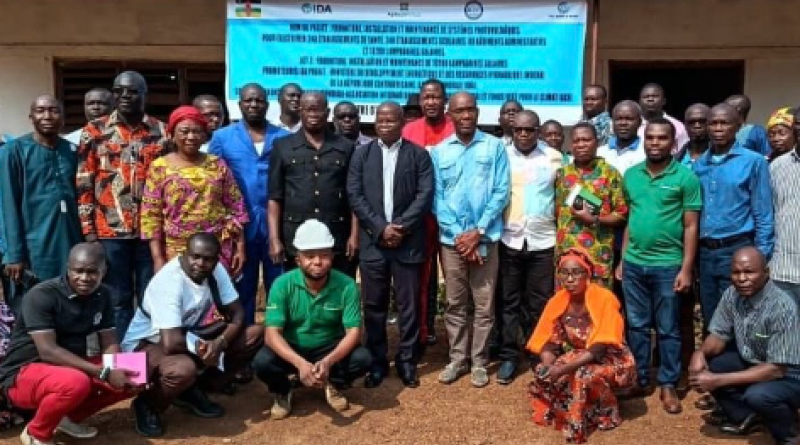
The official launch of the programme signals a broader commitment to sustainable development in the CAR
The Central African Republic (CAR) has formally launched a nationwide solar electrification programme aimed at expanding access to clean, reliable power for public institutions and communities across the country.
The project, led by Aptech Africa, will electrify 240 health facilities, 240 educational institutions, and 80 administrative buildings, alongside the installation of 10,200 solar-powered street lights, marking one of the largest renewable energy deployments undertaken in the country to date.
Ramping up energy access in Central African Republic
Under the programme, Aptech Africa is serving as the design, supply, installation and commissioning partner for a range of solar PV systems tailored to the needs of different public facilities.
The rollout includes
- 101 solar systems of 4kWp,
- 107 systems of 5kWp, and
- 32 systems of 15kWp,
all designed to operate independently of unreliable or unavailable grid power.
The electrification of health facilities is expected to support uninterrupted operation of lighting, medical equipment, vaccine and medicine cold storage, and essential communications.
Officials say this will improve emergency response capacity, maternal healthcare and overall service delivery, particularly in remote and underserved areas.
In the education sector, the installation of solar systems at schools and training institutions will enable access to computers, digital learning tools and improved lighting, extending study hours and enhancing safety for students and staff.
The programme also includes the electrification of administrative buildings, with the aim of improving the efficiency and reliability of public service delivery by ensuring consistent power for offices, data systems and communications.
Reducing reliance on fossil fuels in Central African Republic
Meanwhile, the deployment of more than 10,000 solar-powered street lights is intended to improve public safety and mobility, support evening economic activity and reduce crime in both urban and rural areas.
The lighting systems will operate entirely on solar energy, offering a low-maintenance alternative to conventional street lighting.
Beyond infrastructure delivery, the project is expected to contribute to local skills development and capacity building by creating opportunities for technicians and community members to engage with renewable energy technologies.
The official launch of the programme signals a broader commitment to sustainable development, energy access and reduced reliance on fossil fuels in the Central African Republic, as the country seeks to expand basic services while lowering long-term operating costs and carbon emissions.
Cover photo: The project was recently launched and attended by various role players. Source: aptechsolar/X