

UK must be prepared for a price shock from the Iran war
Governments are having to wake up to the fact they will have to take a closer interest in supply chains for essentials
Donald Trump’s assault on Iran and the deadly conflict it has unleashed is grim and unprecedented – but there is a familiarity to its economic consequences: brace yourself for another price shock.
From the Covid shutdown and subsequent reopening to Russian tanks rolling into Ukraine, the global economy has been rocked by one cost surge after another.
Meanwhile, the climate crisis means more volatility in the cost of commodities whose production is vulnerable to extreme weather events – coffee, cocoa and olive oil.
The reaction to Trump’s Operation Epic Fury in the energy markets was initially relatively restrained. On Friday, though, with the critical strait of Hormuz effectively closed, and reports of production cuts in Kuwait, the dam seemed to break, pushing oil to $90 (£67) a barrel.
Oil shocks are especially painful because of the commodity’s wider uses, not least in fertiliser, and the knock-on effects for manufacturing and transport.
And poorer people are hit hardest. Recent research published by economists at the University of Massachusetts Amherst identified energy, along with food and agriculture as among the commodities that had “a disproportionate capacity to increase inequality when their prices rise”.
Where there are benefits, these are narrowly shared. Another striking recent paper showed that after the 2022 oil price surge in the US, 50% of the windfall benefit from higher prices in the sector went to the wealthiest 1% of individuals, via the stock market. The bottom 50% of people received only 1%.
As Gregor Semieniuk, the lead author, puts it: “While everybody is bearing the inflation costs of an energy price crisis, which drove inflation in 2022, the very prices that are causing this inflation are also giving extraordinary profits to mostly a small minority of very affluent shareholders.”
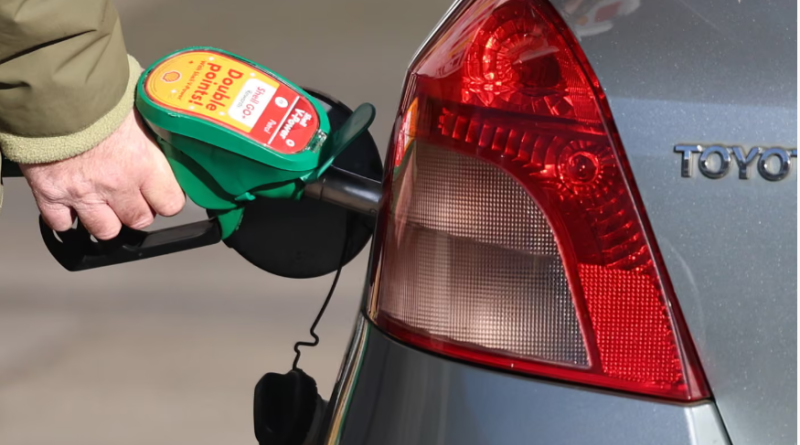
In the UK – unlike the US, a net oil importer, where the impact of higher prices is therefore unambiguously negative – the impact of the Middle East conflict has already added 3p to the cost of a litre of unleaded, according to the RAC.
If the jump in the cost of gas proves sustained, household energy bills could rise sharply when the next quarterly price cap takes effect in July – just as Labour was trumpeting its plans to reduce household costs. Ministers are already thinking about how they might protect consumers.
It is the latest stark reminder that hiving off the job of tackling economy-wide inflation to central banks, and letting the market sort out the rest, is becoming less and less viable in this volatile world.
Even Liz Truss tacitly admitted as much, when she brought in the energy price cap in 2022 – a surprisingly statist policy for an avowed free marketeer.
With or without government action to keep a lid on utility bills, a fresh oil shock is a nightmare for central bankers everywhere, especially in the UK.
They can in theory “look through” supply-side shocks, such as rocketing energy prices, which tend to be inflationary in the short-term but ultimately depress growth and inflation, as consumers cut back spending elsewhere.
Alan Taylor, a dovish independent member of the Bank of England’s monetary policy committee, made that point in a recent speech. “Large energy shocks move faster than inflation-targeting central banks can respond,” he said, adding: “Central banks and their mandates can never fully solve every type of inflation problem, including the big shocks of recent years.”
Yet the prospect of a fresh surge in economy-wide inflation, just as it was set to return to the 2% target, is likely to prompt the divided MPC to hold off from further rate cuts.
So we may now face a grim few months in which the Bank sits on its hands, as unemployment continues to climb with young people bearing the brunt.
Recent research by Joseph Evans and Carsten Jung of the Institute for Public Policy Research highlighted the risks, in particular to workers, of running the economy “too cold for too long” – slowing it down too much to tackle inflation.
Shocks such as these are expected to keep rocking the heavily indebted and import-dependent UK economy in a world with fracturing geopolitics and a raging climate crisis.
That may eventually mean rethinking the monetary policy framework. Economists at the London School of Economics’ Grantham Research Institute have mooted “adaptive inflation targeting”, for example, which would allow for more leeway in times of repeated shocks.
However, politicians will increasingly have to look beyond monetary policy, too: acting to secure supplies of key commodities, protecting the poorest from the worst of the onslaught, and cracking down hard on the price gouging that tends to take place in these tight spots.
In the energy sector, the long-term answer is the one set out by energy secretary, Ed Miliband, in the House of Commons last Thursday, and pursued doggedly by Labour since it came to power in 2024: “Get off our dependence on fossil fuel markets, whose prices we do not control, and on to clean, homegrown power that we do control.”
That will take time, though – and it’s not only energy. Governments are increasingly having to wake up to the fact that they will have to take a closer interest in the supply chains for essentials, from food to rare earths, as the climate crisis and rising geopolitical instability make strung-out, just-in-time supply chains look increasingly fragile.
Should hostilities abate in the coming days, energy supplies could be unblocked – but for the moment, as the chancellor, Rachel Reeves, prepares to give the annual Mais lecture on Labour’s latest plans for kickstarting growth, the UK must ready itself for yet another economic shock.
Cover photo: The impact of the Middle East conflict has already added 3p to the cost of a litre of unleaded petrol, according to the RAC. Photograph: Neil Hall/EPA