

Emerging trends and directions in clean energy technologies in Africa

Clean energy technologies are innovations that materially reduce emissions and pollution compared with fossil fuels
Research into emerging trends and directions in clean energy technologies in Africa shows the continent is shifting towards highly renewable, decentralised systems, with a growing interest in green hydrogen, energy storage and innovative finance.
Take-up of clean energy technologies is not stymied by the technologies (whether because of a lack of access or know-how), but rather the need for improved policy frameworks, financing and regional policy harmonisation.
Clean energy, renewable sources abound in Africa, but aren’t necessarily exploited
Hydropower still dominates the renewable electricity on the continent, but large untapped potential remains in the major river basins of the Congo, Niger, Zambezi and Nile.
Solar PV is the fastest-growing technology, enabled by between 80 and 90% cost declines since 2010, making it the cheapest new power in many African countries.
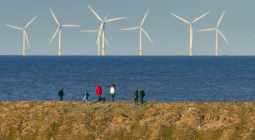
Wind capacity is expanding from a very low base. More than 90% of all installed wind capacity on the continent is located in either North or South Africa. Still, the broader continental potential of around 100GW remains largely untapped.
Uptake of geothermal energy is growing in Kenya and Tanzania, and use of modern bioenergy is expanding into clean cooking and rural electrification, though it is still rather underexploited.
Innovations in technology
One of the major technology trends research is pointing towards is that a strong shift towards off-grid and mini-grid solar plus hybrid systems for rural electrification and productive use of energy.
Studies on the feasibility of a 100% renewable electricity scenario emphasise that variable renewables should be combined with storage technologies (such as batteries, pumped-hydro, thermal, and compressed-air), smart grids, and sector coupling (such as power-to-heat and e‑mobility).
Interest in green hydrogen as a long-duration storage and export vector is picking up momentum. Namibia, South Africa, Kenya and Niger are early movers with future levelised cost of hydrogen potentially falling to around ~€1–1.5/kg by 2050.
High-Voltage Direct Current (HVDC) transmission, pipelines, and ammonia are being evaluated as transport options, with HVDC often touted as the most cost-effective for large-scale use.
Innovation in emerging technologies and new sectors is increasingly supported by renewable‑energy policy performance and instruments such as auctions, tariffs and risk‑mitigation tools.
When it comes to scaling up clean energy in a given space, this hinges on improving the policy frameworks and financing, as well as the regional policy harmonisation.
Crowdfunding and pay-as-you-go solar models are expanding access to energy and supporting green innovation.
Cover photo: Solar-powered trees in a vibrant urban park.