


A Perplexing Ohio Bill Would Ban Wind, Solar … and Coal?
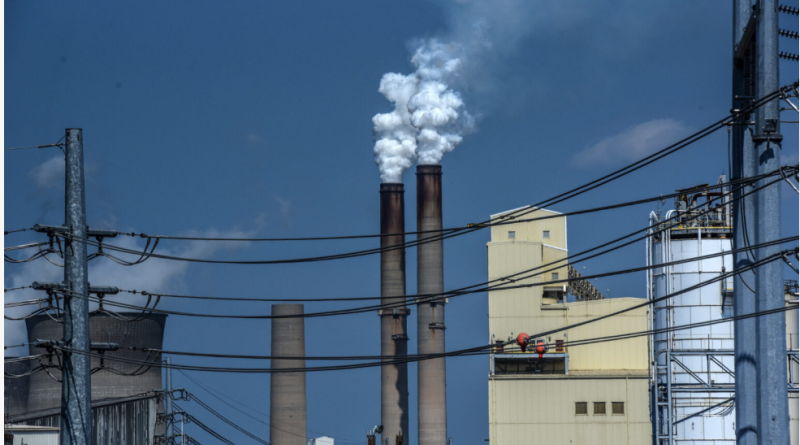
Nobody expects the Buckeye State to ban coal power, but a provision in a bill designed to harm wind and solar may also be an obstacle for building power plants that run on fossil fuels.
An idea for restricting renewable energy has traveled from Utah to Louisiana and is now in New Hampshire, Arizona and Ohio. The proposed legislation is part of a push by fossil-fuel-aligned groups to promote natural gas and hurt competing power sources.
The Ohio bill, Senate Bill 294, amounts to a ban on utility-scale wind and solar by adopting a new definition of “reliable energy source” that would require new power plants to be able to operate at any time of day or night.
In addition, power plants must have “a minimum capacity factor” of 50 percent. A plant’s capacity factor is a measure of how its actual output compares to the maximum that is technically possible. If a plant runs at full capacity around the clock for a year, its capacity factor would be 100 percent.
Wind and solar plants have lower capacity factors because they depend on the sun and wind. But grid operators and power companies still rely heavily on wind and solar because they understand the attributes of their power plants and view them as part of a portfolio.
To put a 50-percent requirement in state law borders on incoherent. Almost no power technologies make the cut.
To help explain, let’s look at the average capacity factors for each major power plant technology in 2024, the most recent full year available from the U.S. Energy Information Administration.
It’s no surprise to see nuclear at the top, with 90.8 percent. But then there is a big drop-off before the runner-up, combined-cycle natural gas, at 60.5 percent.
Wood-burning power plants are next, with 55.8 percent. (This is a small but significant source of electricity, with 7,300 megawatts of U.S. capacity.)
After that, every other power source is below the 50 percent benchmark in the Ohio bill. This includes renewables, such as wind and solar, which have capacity factors of 34.3 percent and 23.2 percent, respectively. Hydropower, another leading renewable energy source, is 34.6 percent.
But many fossil-fuel power plants also fall below the threshold. This includes coal-fired power plants, with 42.6 percent. It also includes natural gas peaker plants, such as simple-cycle gas turbines, with 13.9 percent, and all oil-burning plants, which are less than 10 percent.
Coal plants have low capacity factors largely because their owners often choose to run less expensive alternatives, and most are old and need downtime for maintenance.
Gas peakers have low capacity factors by design. Their job is to be available during periods of high demand and to operate in short bursts.
My question: Did the people who wrote this bill determine which power plants have capacity factors below 50 percent, or did they assume this dragnet would only capture wind and solar?
But the question isn’t for the Ohio co-sponsors, since much of the text—including the capacity factor wording—comes from model legislation written by the American Legislative Exchange Council, or ALEC, an organization with a long track record of hostility toward renewable energy and support for fossil fuels. (I reached out to the Ohio co-sponsors and ALEC, and they didn’t respond before my deadline.)
During a November committee hearing, Lora Current, ALEC’s senior manager of the Energy, Environment and Agriculture Task Force, testified in favor of the bill. A senator asked her whether coal failed to qualify under the bill because its capacity factor is less than 50 percent.
Current said the bill refers to the capacity factor a technology “could produce,” not the actual capacity factor it has produced. She suggested that a new coal plant would be permitted under the bill, but she said she’d follow up with the senator to confirm.
But the bill simply says “capacity factor” without providing a definition or specifying how it would be calculated.
The ALEC model legislation, called “The Affordable, Reliable and Clean Energy Security Act,” was finalized in September 2024 and described as “a common sense energy agenda for the future.”
Some of the ideas used in this model had appeared earlier that year, including in a measure signed into law in Utah, House Bill 374. The main sponsor, state Rep. Colin Jack, a Republican, was named an “ALEC Policy Champion” that same year.
In 2025, the language from the model appeared in Louisiana House Bill 692, which Republican Gov. Jeff Landry signed into law.
While I’m focusing on how the bills seek to exclude renewables, another key component is that they define natural gas as a “green energy source” or a “clean energy source.” The wording varies depending on the terminology used in each state.
At least two other active bills, House Bill 2331 in Arizona and House Bill 1455 in New Hampshire, have language or ideas that overlap with the model legislation. I don’t think either will become law due to opposition from each state’s governor. (E&E News wrote about the New Hampshire bill this month.) Thanks to Advanced Energy United and the Insight Engine database for assistance in identifying the bills with similar concepts or language.
The Ohio bill probably has the best chance for approval. One sign is that it’s had three hearings, and opponents are taking it seriously enough to put up a fight. The detractors include clean energy and environmental groups and the Ohio Chamber of Commerce. (Canary Media wrote last week about the bill and the most recent hearing.)
At the hearing, state Sen. Brian Chavez, a Republican and chairman of the Senate Energy Committee, explained the reasoning behind the capacity factor requirement.
“If I have limited funds, do I want to buy a car that’s effective less than 50 percent of the time or do I want to spend my money on a vehicle that is 95 percent effective and will speed up and slow down when I need it?” he asked.
Contacted for comment, Chavez said through a spokeswoman that a key issue in this discussion is that Ohio has limited space, so it’s important that new power plants make efficient use of land.
I should note that the bill doesn’t explicitly ban solar and wind. Its action is more subtle, setting priorities and definitions that would make it difficult to envision state regulators ever approving a wind or solar project.
I asked Emily Grubert, a University of Notre Dame energy systems expert, for her assessment of the capacity factor requirement, and she gave her own car analogy.
“Capacity factor is a terrible metric for ‘reliability,’” she said in an email. “It just measures how much the plant is actually running as a percentage of the maximum possible output. This is essentially like saying that a car isn’t reliable unless it’s driving 100 mph 24 hours a day or 200 mph 12 hours a day.”
Grubert added that high-capacity factor plants can also be unreliable. For example, a plant built to run at an 80 percent capacity factor, but actually running at about 50 percent most of the time because of maintenance issues, isn’t available when it’s expected and needed.
Her overall thought on the capacity factor requirement in the bill: “This is absolutely bonkers.”
My own analogy: Requiring a 50 percent capacity factor is like saying every player on a baseball roster needs to be a starting pitcher, capable of going nine innings. This would mean every player, even that utility infielder on the last spot on the bench, would have the skills and costs of a starting pitcher. Such a team would have a high payroll and almost surely finish in last place. Management would get fired.
I asked Josiah Neeley, a senior fellow for energy policy at the R Street Institute, a think tank that supports open markets, what he makes of the approach in the ALEC model legislation.
“Maintaining electric reliability is very important, but it’s also important to remember that reliability is not based on individual plants; it’s system-wide reliability,” he said. “If an individual source has a lower capacity factor, if they’re not running as much, that’s not necessarily a reliability problem. And I think one of the big costs of an approach like this is that lower-cost resources are not going to be able to come online, and so that will raise costs for consumers.”
He’s touching on one of the benefits of wind and solar: Their fuel is free, which means their operating costs are much lower and more predictable than those of competing sources.
I’ve lived in Ohio and covered energy for about two decades and I can see that this bill has enough support to be taken seriously. That said, I also have doubts that it has enough support to pass both chambers of the Legislature and get signed by the governor.
The affordability concerns raised by people such as Neeley will make it difficult to pass in an election year when many consumers are upset about high utility bills.
But the idea of shaping state policy to benefit natural gas while harming renewables is not going away.
Cover photo: The coal-fired Gavin Power Plant in Cheshire, Ohio. Credit: Stephanie Keith/Getty Images