

What Orbán’s fall from power means for research

20 04 2026 | 15:03David Adam

Hungary’s new leader has promised a ‘system change’ — but researchers say that rebuilding science will take more than a reversal of Victor Orbán’s laws.

The electoral defeat of Hungarian Prime Minister Viktor Orbán after 16 years in power is being welcomed by scientists in the country — and elsewhere. Researchers who watched Orbán dismantle academic freedom and strip universities of their autonomy, and saw Hungary blocked from receiving some funding from the European Union, are now cautiously hopeful that his successor, Péter Magyar, will repair the damage.

Some are also watching for ripple effects outside Europe. Orbán’s systematic erosion of university independence became a model for the changes to the research system now under way in the United States. And Hungary was increasingly seen as a hub for Chinese influence in Europe, with plans for the country to host the first Chinese university campus in the EU.

Magyar’s Tisza party won a two-thirds majority in Sunday’s parliamentary election — sufficient to amend Hungary’s constitution and undo many of Orbán’s structural changes. But how far those changes will reach in the university and research sectors remains to be seen, and researchers warn that simply restoring the old system might not be enough to repair the damage done to the Hungarian university sector.

“What will happen to Hungarian science now is still very uncertain and unpredictable, but at least we have some hope that the future will bring some change,” says Imola Wilhelm, a neuroscientist at the Biological Research Centre in Szeged, Hungary. “What we really need is stability and transparency. In the last few years, the scientific environment has been so turbulent here.”

Restoring trust

Under Orbán’s Fidesz party, Hungary’s scientific system was reshaped. The Hungarian Academy of Sciences was reorganized so that management of many universities was transferred to trusts governed by boards whose members were often political appointees selected by Fidesz. In response to these changes, the Council of the European Union, a group of government ministers from each of the bloc’s 27 member states, agreed in 2022 to freeze around €6.3 billion (US$6.6 billion) in funding for research and exchange programmes for higher-education and cultural institutions, including 21 universities, in Hungary.

Since 2023, however, the Hungarian Research Network, a self-governing research organization whose president was appointed by Orbán, has developed a model to increase autonomy and research standards in 15 research institutions.

In his victory speech, Magyar pledged that his party “will do everything to restore the rule of law, plural democracy and the system of checks and balances”.

Science is unlikely to be the government’s immediate priority; sectors such as health care and education will probably take precedence, says Balázs Lengyel, an economic geographer at the Corvinus University of Budapest. But some changes won’t require any political involvement. Orbán’s stance on academic freedom led to many of Lengyel’s colleagues and collaborators refusing to travel to Hungary on principle. “I expect that this will change,” Lengyel says.

Magyar’s pledge to restore relations with the EU, in combination with the restoration of institutional autonomy, should enable Hungarian universities and research centres to rejoin European projects, says Kurt Deketelaere, secretary-general of the League of European Research Universities. “We can also expect the PM and his government to be supportive and protective of academic freedom, unlike his predecessor,” he says. “There is a great opportunity for Hungary now to support EU research and innovation policy.”

“I expect participation in European research to become easier, but it’s too early to say when,” says Lengyel. “We want to be full members of the European research area again. It’s not just the lack of money. It’s a loss of social capital and trust.”

Deketelaere adds that he hopes the Hungarian election result will inspire other countries that have experienced similar challenges. “There is still hope. At the end of the day, democracy and academic freedom will prevail.”

Reform, not reversal

However, simply undoing Fidesz’s policies will not be enough to reform Hungary’s research sector, argues Andrea Pető, a historian at the Central European University, which was forced to relocate from Budapest to Vienna in 2019 because of governance constraints. “Hungarian academia and higher education [have] a historic opportunity to build a new system more appropriate for the 21st century, rather than restore the old one,” she says.

Lengyel shares Pető’s concerns about the idea of simply reversing all decisions made over the past decade. “I wouldn’t say we should go back to how things were before,” he says. “In some ways, the system improved, especially in attracting international talent and increasing research output.” At his university, the reforms encouraged researchers to look abroad for students and cleared some of the bureaucracy associated with being a public institution.

However, the sector’s political entanglement meant that, although aspects of the university’s performance improved, its researchers felt less trusted by those in other nations, and disconnected from the wider academic world. The election result, says Lengyel, should send a signal that helps to restore trust and rebuild connections. “Being at a Hungarian institute won’t feel like a disadvantage any more.”


doi: https://doi.org/10.1038/d41586-026-01225-0

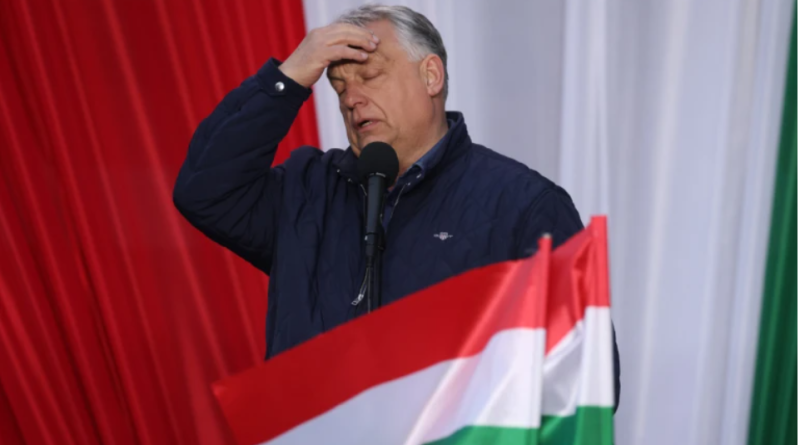
Cover photo:  During his time as prime minister, Viktor Orbán overhauled the Hungarian higher-education system to align research institutions with his political party’s conservative ideology.Credit: Sean Gallup/Getty

k