

Where Bill Gates draws the line on dimming the sun

Bill Gates says he would support deploying artificial cooling technologies to lower global temperatures — but only if the planet hits so-called climate tipping points.
Why it matters: The Microsoft co-founder and philanthropist is a major funder of research into this controversial technology, and his comments in a recent interview with Axios are among his most expansive yet.
- Activity by startups has sparked a wave of media attention to the tech, which is known as geoengineering. Coverage includes The New Yorker, The Atlantic and Politico magazine during November alone.
The big picture: Solar radiation management — reflecting more of the sun's energy back into space — is a subset of geoengineering that's shifting from fringe science and conspiracy theory into mainstream policy debate.
- The idea could help blunt extreme weather, but its risks remain uncertain and likely significant.
How it works: Solar radiation management, or solar geoengineering, aims to cool the planet by reflecting sunlight.
- The most-discussed method involves injecting sulfuric-acid particles into the upper atmosphere, mimicking the cooling effect of volcanic eruptions.
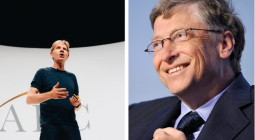
Driving the news: Gates' comments, made during an interview last month at Caltech, are significant because he makes a distinction between what's become a more common position — supporting research into geoengineering — versus actually deploying it.
Zoom out: In the interview, Gates said the world is largely on track to avoid the worst climate impacts thanks to rising clean-energy deployment.
- But he emphasized there's still an outlier chance of especially dire consequences driven in part by tipping points — scenarios in which warming triggers reinforcing feedbacks, or secondary effects, which accelerate climate change.
- You "would then need to reach for some other type of intervention," Gates said.
When asked whether that meant geoengineering — and whether he would support its deployment in such a scenario — Gates replied: "Yes, I've been a funder of trying to understand geoengineering."
- Much of his funding isn't publicly disclosed, but what is known includes past support for Harvard University's solar geoengineering program.
Context: Gates stressed the difference between supporting research and advocating deployment.
- "No way am I pushing the world in that direction," he said, before adding that having knowledge about it could be "quite valuable."
Friction point: "There are two big arguments against it, which are both legitimate and need to be considered," Gates said.
- Political: Relying on solar geoengineering could undermine efforts to cut fossil-fuel use. "That's terrible if that slows that down," he said.
- Scientific: Researchers need a clear understanding of how injected particles would affect communities, including risks of altered rainfall or drought.
The intrigue: Conspiracy theorists — who have targeted Gates for years — have focused on geoengineering as well, fueling political backlash.
- Such theories are a major driver of state-level bans and prompted Trump administration investigations.
Catch up fast: Israel-based Stardust Solutions disclosed a $60 million fundraising round in October.
- That raised alarms about whether private companies should be able to act independently on such a consequential technology.
Zoom out: At this year's United Nations climate summit in Brazil, leaders acknowledged for the first time that the world is on track to exceed temperature thresholds associated with especially severe impacts.
- Those conditions could trigger the kinds of tipping points under which Gates said he could support deploying geoengineering.
- Scientists say such scenarios are likely decades away, even as extreme weather worsens today.
The bottom line: "In some ways, that's the least confrontational framing" on geoengineering, said Zeke Hausfather, a climate scientist at Berkeley Earth, about Gates' comments.
- "It doesn't remove all the thorny questions, but it's probably the most defensible approach to take today."
Cover photo: Illustration: Lindsey Bailey/Axios