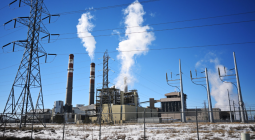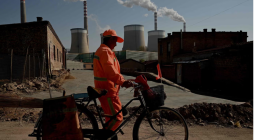


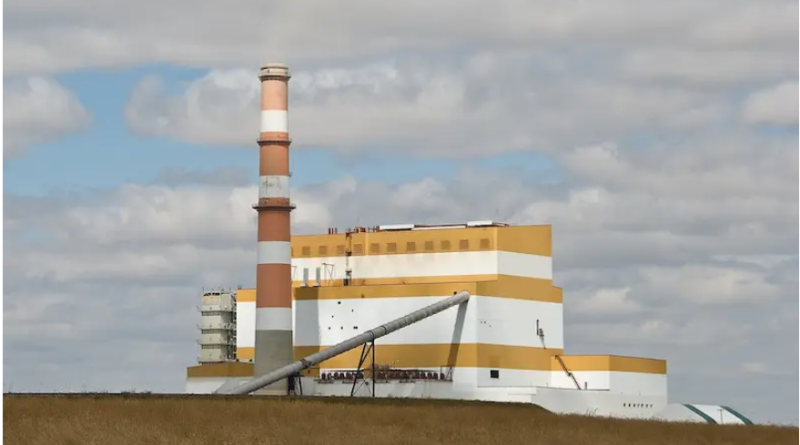
Saskatchewan’s plans for the coal plants first surfaced last June, when the minister responsible for SaskPower, Jeremy Harrison, penned a letter to employees sharing the company’s plans to extend up to 1,500 megawatts of coal generation by refurbishing existing plants.
In the letter, Harrison said “the federal government has no standing in this discussion,” adding that coal will continue as “a pillar” of Saskatchewan’s electricity generation system as the province develops its planned nuclear power plants.
Federal rules require the phaseout of all unabated coal-fired power generation across Canada no later than December 31, 2029. Saskatchewan is exempt under certain conditions until 2030, The Mix reported in August. This exemption could be revoked if the federal government determines the terms aren’t being met, Environment and Climate Change Canada (ECCC) said at the time in an emailed statement.
“The federal coal-fired electricity regulations, which were enacted in 2012, exist to drive down carbon pollution from the dirtiest source on the grid by accelerating a coal phaseout,” CPJ Climate Justice Policy Analyst Maryo Wahba wrote in a mid-November opinion piece. “But puzzlingly, Ottawa has repeatedly allowed Saskatchewan to delay the transition by signing equivalency agreements that suspend federal coal rules in the province.”
Meanwhile, he added, “Saskatchewan remains one of Canada’s highest per-capita emitters—and Canada, in turn, ranks among the highest per-capita emitters in the world.”
The court ruled that CPJ had established no legal basis for it to review the coal decision.
“The applicants cite no statute or treaty or other edict that would underpin the relief they seek,” King’s Bench for Saskatchewan Justice R.S. Smith wrote [pdf] in his 15-page ruling. “It would appear their complaint is that the Coal Decision is yet another wrongheaded decision on the part of the Government of Saskatchewan.”
But “not every dispute is justiciable,” Smith ruled. “Climate change is real. Therapeutic steps should be taken. This is why it is important that all citizens of the body politic elect thoughtful and intelligent people to sit in our parliament, legislature, and municipal councils.”
CPJ countered [pdf] in a release that a judicial review “is the only means of holding the government to account for this unprecedented decision. Without it, evidence and the government’s decision-making will remain hidden from public view.”
“Citizens are demanding reasons for the Coal Decision that are justified, transparent, and intelligible,” Wright declared. “We believe that a near billion-dollar administrative decision to double down on the most polluting form of energy generation—a decision which, we believe, violates the rule of law—is something that the courts can and should review.”