

What South Africa could achieve with green hydrogen and ammonia in shipping
World Bank analysis points to green ammonia and methanol as leading alternatives to conventional bunker fuels
As the world races to decarbonise shipping, Africa faces both immense opportunity and unique challenges. Shipping contributes significantly to global emissions, and with the International Maritime Organisation (IMO) targeting net-zero by 2050, African ports and shipping operators are under pressure to transition to cleaner fuels.
At the same time, the continent’s abundant renewable energy resources could position it as a key player in the emerging green maritime economy.
Recent industry and policy reports underscore Africa’s potential to leverage its abundant renewable energy resources to supply the global maritime sector with low‑carbon fuels.
Looking at South Africa, a 2024 World Economic Forum white paper highlights the country’s strategic position and renewable capacity to produce green hydrogen and its derivatives such as e‑ammonia and e‑methanol to decarbonise both domestic and international shipping.
Feasibility studies and potential shipping corridors
The paper indicates that the country’s unique geography, astride major shipping lanes connecting Asia with the western hemisphere, positions it as an ideal hub for producing, bunkering and exporting zero-emission shipping fuels.
“These global opportunities could power the country away from fossil fuels, transform the nation’s economy, create employment opportunities in new sectors and improve the lives of its people,” the WEF paper said.
WEF further states that an economy based on renewables and green hydrogen could provide the foundation for the country to produce and export zero-carbon molecules such as clean ammonia and methanol, essential for decarbonising global transportation and heavy industrial processes.
Have you read? Secure storage and movement of hydrogen molecules
“This transition could add close to 6% in GDP and 2 million new jobs in a country where tackling unsustainable levels of joblessness, poverty and inequality dominates political discourse.”
The paper stresses that the South African government has enacted climate-forward policies aimed at decarbonising transport, commercialising green hydrogen and developing the value chain for renewable energy. It has framed an investment plan for the just energy transition, targeting a budget of nearly R1.5 trillion.
The World Bank has completed pre-feasibility studies into several major green hydrogen projects. Workshop participants agreed that combining forces across shipping and trucking could strengthen the demand and supply signals for the zero-emission technologies that hold the key to decarbonising both sectors.
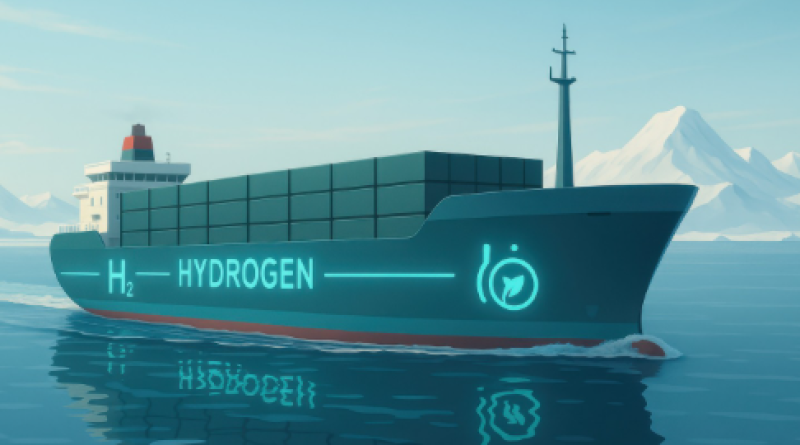
Furthermore, World Bank analysis points to green ammonia and methanol as leading alternatives to conventional bunker fuels, positioning seaports as future clean energy hubs.
A Global Maritime Forum study similarly identifies South Africa as well‑placed to lead the transition to zero‑carbon shipping fuels, noting strong renewable potential and export opportunities.
And more recent work suggests the development of a green ammonia corridor between South Africa and Europe as early as 2029, signalling tangible momentum toward a decarbonised maritime future.
The study, Assessing the Feasibility of the South Africa–Europe Iron Ore Green Shipping Corridor by the Global Maritime Forum, finds that the South Africa–Europe iron ore route could deploy green ammonia-powered bulk carriers from 2029, with full decarbonisation achievable by 2035. According to the report, announced green ammonia projects in South Africa have the potential to competitively supply the corridor’s fuel demand.
It states that while green ammonia may initially be bunkered in Rotterdam during the early years of operation, Saldanha is well positioned to develop into the corridor’s long-term bunkering hub.
The study further notes that emerging global and regional regulations could help create a viable business case for the corridor, although uncertainty around the timing and design of these regulations remains.
It concludes that coordinated action from both public and private stakeholders will be essential to launch the corridor by 2029 and achieve full decarbonisation by 2035.
Transport sector roadmaps to zero emissions will form part of a session on From Alternative Fuels to Zero-Emission Transport Systems at Africa’s Green Economy Summit on Wednesday 25 February.
Cover photo: talashow©123rf