
Africa: Demand up for solar coupled with energy storage systems
These systems are becoming increasingly accessible, especially in developing regions with limited grid infrastructure
An increasing number of African countries are starting Requests for Proposals (RfPs) for projects including both solar and storage, as there is a growing understanding of the technical advantages of storage as well as its price evolution.
AFSIA’s Africa Solar Outlook 2025 report, highlights that one of the first African countries to do so was South Africa, when the government launched the RMIPPPP (Risk Mitigation IPP Procurement Programme) in 2020.
The programme intended to fill the short term supply gap, alleviate the electricity supply constraints and reduce the extensive use of diesel-based peaking electrical generators which were prevalent at that time, said the report. This was open to all technologies (except diesel of course) and was mostly looking for “dispatchability.”
“Dispatchability being one of the weaknesses of renewable energy, it was an industry-first when it appeared that several solar and storage projects were among the 11 preferred bidders.
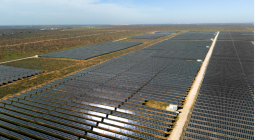
“The most notable example is the Kenhardt 1-2-3 project by Scatec, for a total of 540MW and battery storage capacity of 225MW/1,140MWh. This project has been commissioned in 2024,” said the report.
Meanwhile, similar calls for solar and storage projects have popped all over the continent.
Notable African utility-scale solar and storage projects
- The Gambia: Soma Project – Phase 2 100MW PV, 130MWh Storage
- Senegal: Kolda Solar Farm – 60MW PV, 72MWh Storage
- Egypt: Masdar and Infinity Power Project – 900MW PV, 720MWh Storage
- Togo: Dalwak Solar Park – 25MW PV, 40MWh Storage
- South Sudan: Nesitu Solar Park – 20MW PV, 35MWh Storage
- Eritrea: Dekemhare Solar Park 30MW PV, 30MWh Storage
Several initiatives have been launched to build large scale storage projects, connected to the grid but not directly related to any particular adjacent generation plant, said the report.
This is particularly the case in South Africa with the launch of the BESIPPPP – Battery Energy Storage IPP Procurement Programme. Launched in 2023, the programme is now already in its third bid window and construction is now ongoing on the projects that won bid window 1 for a total of 513MW/2,052 MWh of BESS.
Similar projects have also been launched in Senegal, Malawi, Botswana, Tanzania, Namibia and Mauritius, for a total of 500+MW.
Storage technology evolving
Energy storage has become a critical complement to solar power, helping to mitigate its intermittent nature. As PV technology advances, manufacturers are focusing on energy storage solutions that enhance solar power’s reliability and scalability.
The report noted that JA Solar, a global leader in the PV industry, recently launched its first shipment of energy storage systems to Africa. The “BluePlanet” liquid-cooled storage cabinets, which offer an AC-side efficiency exceeding 90%, are designed to address challenges in regions with unstable grid infrastructure.
“With features like rapid switching and a minimal temperature variation, the system ensures optimal energy conversion and durability, even in extreme climates. This is especially crucial in regions like East Africa, where energy reliability remains a challenge. Similarly, JinkoSolar has been focusing on off-grid applications in Africa.
“Its battery energy storage systems (BESS) integrate seamlessly with its PV modules, enabling decentralised power solutions for underserved regions,” said the report. By 2024, JinkoSolar was aiming to deliver around 700MWh of off-grid solar storage to Africa.
“The cost of energy storage technology is falling, making solar + storage systems increasingly accessible, especially in developing regions with limited grid infrastructure. This trend is vital for addressing the global energy crisis and advancing the deployment of renewable energy.”
African countries sign up to join BESS Consortium
At COP28 in 2023, several African countries formally expressed interest in joining the Battery Energy Storage Systems (BESS) Consortium. At the time, joining the BESS Consortium, a multi-stakeholder partnership initiative of the Global Leadership Council, meant members would have to commit to participate in efforts to reach energy storage commitments of 5GW through the end of 2024.
It was envisioned that this will, in turn, provide a roadmap to ultimately achieving 400GW of renewable energy by 2030.
Burkina Faso, Egypt, Ghana, Kenya, Malawi, Mauritania, Mozambique, Nigeria and Togo formally expressed interest to join the Consortium.
In 2023, Mauritania’s Minister of Petroleum, Mines and Energy, Nany Ould Chrougha expressed satisfaction over his country’s membership in the consortium. He said that the need for battery storage is paramount for the country, which already records 40% reliance on renewable energy and is set to become increasingly dependent, particularly, on solar and wind power.
Countries who join the consortium receive support from the African Development Bank, the World Bank, the Asian Development Bank, the Inter-American Development Bank, the Agence Française de Développement (AFD), Africa50 and Masdar.
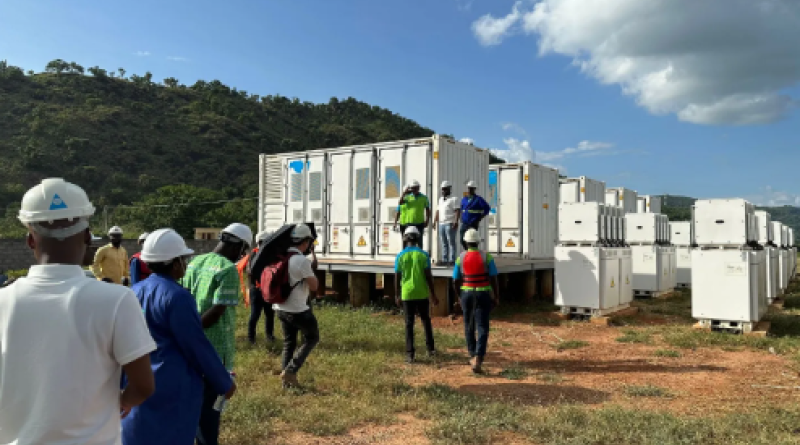
Cover photo: The battery energy storage system at the Bui Hydro-Solar PV Hybrid system at The Bui Generating Station in Ghana.