

We are Hitting a Major Methane Milestone

The Drain is a weekly roundup of environmental and climate news from Legal Planet.
This year, we celebrate 250 years since its discovery. No, I don’t mean America (though plans are underway to celebrate the semiquincentennial this July.) I’m talking about methane — that colorless, odorless, flammable and short-lived but super potent greenhouse gas that is helping heat the planet faster than carbon dioxide. It was 250 years ago that an Italian physicist named Alessandro Volta first discovered methane while observing bubbles at Lago Maggiore in northern Italy — though he is perhaps better known for inventing the electric battery.
Alessandro Giuseppe Antonio Anastasio Volta was teaching experimental physics at a grammar school in the 1770s, focused on the chemistry of gases. By some accounts, he’d read a paper by Benjamin Franklin on the topic of “flammable air,” and was inspired to investigate the bubbles that he saw emitted from putrefying plant matter in swampy lakes in his area, when he discovered a new type of ‘inflammable air’ which he distinguished from hydrogen, the other “inflammable air.” He outlined his discovery in the publication Sull’aria Infiammabile Nativa Delle Paludi (“On the inflammable air native to swamp marshes”), according to an exhibit on the subject from St. Catharine’s College in Cambridge. Volta described how methane, when mixed with oxygen, could be ignited using an electric spark as delivered by the static electricity stored in a capacitor. (Relevant sidenote: Volta went on to create “the voltaic pile,” a stack of alternating zinc and silver discs separated by brine-soaked cloth. He found that when a wire was connected to both ends of the pile, a steady current flowed between the layers. This was the early form of the modern electric battery, which he unveiled in 1800. And yes, the electrical unit “Volt” is named after him.)
Next week, scientists, policymakers, and innovators will mark the 250 years since Volta’s discovery of methane by gathering for the Methane Action for People & Planet. The conference seeks to highlight the latest science on methane monitoring as well as the policy and technology innovations needed to rapidly cut methane emissions. Indeed, there are lots of innovations on both fronts.
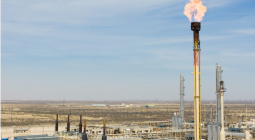
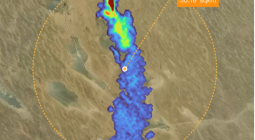
Volta didn’t know it at the time, but we know now that methane is a super pollutant 86 times more powerful than carbon dioxide in the short-term. It’s responsible for nearly 50% of recent global warming. And methane pollution has serious and dangerous health consequences. Reducing methane pollution is the single fastest way to reverse rising global temperatures, so CH4 has joined CO2 as a climate super villain. When it comes to which methane emissions to target, there is growing focus on “super-emitters” as the most meaningful way to pull the emergency break on global warming. Fortunately, we have powerful new tools for observing super-emitters: satellite instruments that can detect methane from orbit.
In order to help identify the most extreme and most stubborn super-polluting plumes in various sectors, UCLA’s STOP Methane Project is releasing a new set of user-friendly ranking lists all this month. Last week, we unveiled the Spotlight on the Top 25 Methane Plumes in 2025: Oil & Gas, which garnered considerable media attention, including this story in The Guardian by Damian Carrington.
Our UCLA team analyzed 2025 satellite data, from the independent non-profit Carbon Mapper, that show 4,404 plumes observed at 2,489 oil and gas sector sites worldwide. These are sites in dozens of countries of all income levels and in all world regions. Turns out that 15 of the Top 25 super-polluting sites are in Turkmenistan, a Central Asian nation whose state-owned gas company is one of the largest producers of liquified natural gas in the world.
There’s a strong ‘buyer beware’ message to this new data, because Turkey continues to finalize a gas deal with Turkmenistan and as Turkmenistan’s president is reportedly planning an official visit to Brussels to discuss energy partnerships with the European Parliament. Our lists, thanks to Carbon Mapper data, put a spotlight on some of the biggest challenges and opportunities to reduce methane pollution. Some of our rankings also identify the potentially responsible operators involved. These are massive plumes of methane that, in most cases, did not spur news coverage at the time but that we can identify thanks to satellite instruments patrolling from space.
In 250 years, we’ve come a long way from Alessandro Volta staring at bubbles in the lake.
Citing concerns about affordability — because of course — New York Governor Kathy Hochul has proposed revising that state’s landmark 2019 climate law, asking to delay regulations to implement it by several years and to adopt a different greenhouse-gas accounting method. Hochul called the law’s current targets “costly and unattainable” Olivia Raimonde reports for Bloomberg Law.
Jigar Shah and Suzanne Hunt have 7 suggestions for Gov. Hochul and 6 proposals for the state Legislature in order for New York to “take charge of its energy future” with costs in mind.
There’s a great conversation between activist Pete Sikora and Dave Roberts on Volts about what would actually serve affordability “and the larger politics behind this puzzling own-goal of a fight.”
This shakiness of the state’s climate law is more than just a New York story so take note even if you’re not in the Big Apple. “The dispute is emblematic of the way the cost of living crisis is deepening a tension at the heart of climate politics,” writes Emily Pontecorvo at Heatmap News.
We’ll be exploring this exact topic from all angles on April 3 at UCLA School of Law for the Emmett Institute symposium “Can Abundance Be Sustainable?” Come join us by RSVPing for free.
The US is headed toward a homeowner’s insurance crisis thanks to climate-fueled disasters. Want to find out how your state fares? Staffers at Grist have a big feature on this. “California is throwing everything it has at its insurance crisis, but the state government still can’t seem to move the needle. Insurance prices have gone up by 16 percent in the last two years,” they write.
U.S. Reps. Sean Casten and Mike Levin released the “Energy Bills Relief Act,” the Democrats’ response to high electricity prices. “A roadmap to lower your energy bill.”
Matthew Zeitlin had a little fun poking at us Californians for the gas prices we’re likely to see very soon. If the strait remains closed through March and production shut-ins increase as storage fills up, “it’s totally reasonable to think oil is going to be $150 a barrel, if not more,” Stanford’s Ryan Cummings told him. “And if that’s the case, we’ll see higher than $7 a gallon average gasoline price in California.” Cummings will be speaking at our April 3 symposium on Panel 2: Affordability and the Transition Away from Fossil Fuels.
The Courts
California and other Democratic-controlled states as well as several major cities and counties on Thursday challenged the Trump administration’s repeal of EPA’s greenhouse gas endangerment finding. Read the lawsuit here.
The president is “choosing Big Oil profits over our health,” California Attorney General Rob Bonta said. An EPA spokeswoman said in a statement to the NYT that the agency conducted a “robust analysis of the law.”
Bonta’s been busy: California yesterday filed a new lawsuit against the Trump Administration challenging Energy Secretary Chris Wright’s “Pipeline Capacity Prioritization and Allocation Order and seeking to halt its use as the basis for Sable Offshore’s unlawful restart of two California onshore oil pipelines that are subject to State regulation and oversight. The fossil fuel industry says ‘Jump,’ and the Trump Administration asks, ‘How high?’” Bonta said.
Sam Alito’s latest reversal — deciding that even though he is well known for his fossil fuel holdings and track record of deciding in the industry’s favor, he need not recuse from the recent decision to grant the oil companies’ petition in Boulder’s case against Suncor and Exxon — is “an absolute embarrassment,” writes Hannah Story Brown in a scathing story for Slate. “Justice Alito could and should belatedly recuse from participating in this case” Brown writes.
The city of Long Beach must halt the expansion of a polluting oil storage tank at its port, an LA County Superior Court ruled. The judge cited an inadequate environmental review of a project expected to emit cancer-causing chemicals like hydrogen sulfide, benzene, and other toxic chemicals near schools. “The City’s approval of this project was unlawful,” said Esme Levy, attorney at Earthjustice, which worked with Communities for a Better Environment on the case.
Extreme Weather and Climate Models
Extreme weather pushed temperatures above 100 degrees Fahrenheit in parts of California and the Southwest. “Jaw-dropping,” “insane,” “truly historic,” “literally flabbergasting,” “incredible,” and “anomalous [even for] the middle of summer” is how one meteorologist described it. Some coverage of this extreme heat was better than others.
A social media story by the San Francisco Chronicle about the heat was particularly jarring. A photo of two Bay Area residents in summer tank tops slathering sunscreen on one another was a master class in how NOT to select an image for a story about climate change-fueled extreme weather. The clickbait post got thousands of more likes than the paper’s typical posts. Hmmm. Covering Climate Now has a guide to picking visuals to illustrate the seriousness of extreme heat rather than making it look like ‘fun in the sun.’
Western U.S. states face significant challenges because winter failed to deliver the snow that acts as a reservoir to keep rivers and streams flowing all summer. It’s a record drought in many places, Kirk Siegler reports from Montana and Boise for NPR. The early stretch of hot days and warm nights has been nicknamed a “snow-eater” reports Ezra David Romero.
Meanwhile in Hawaii, more than 2,000 people remained without power this weekend after the state suffered its worst flooding in more than 20 years when heavy rains fell across the islands.
As for the big picture, the years between 2015 and 2025 have been the hottest since records began, the World Meteorological Organization said on Monday, with 2025 ranking either second or third overall.
A study about the pace of global warming, published in the journal Geophysical Research Letters this month, found that, even after accounting for other phenomena such as volcanic eruptions, solar radiation and natural variability, the rate of global warming has accelerated since 2015.
The New York Times created a series of detailed maps showing some of the coastal cities at risk and populated, low-lying areas that could be threatened if the currently melting Thwaites Glacier in Antarctica were to collapse today.
My UCLA Law colleague Ted Parson wrote about how climate scientists are starting to focus attention on why Earth is getting darker, and why that should alarm us.
Trump administration
File this next one under the opposite of “energy.” What was just a possibility last week is now weird-ass reality: the Trump administration is actually going to use our tax dollars to pay French energy major TotalEnergies $1 billion to kill its plans to produce wind energy off the east coast, during an energy crisis. There’s no way of explaining this catch-and-kill scheme that doesn’t sound completely bananas. Especially when you factor in that TotalEnergies has agreed to pump money into fossil fuel projects instead.
The Trump administration plans to convene the so-called God Squad, a high-level federal panel that has the power to override protections under the Endangered Species Act, for a March 31 meeting related to oil and gas in the Gulf of Mexico, Caitrin Einhorn reports.
EPA Administrator Lee Zeldin will be the keynote speaker at an Earth Month conference sponsored by the Heartland Institute, the right-wing group that rejects the overwhelming scientific consensus on climate change, Lisa Friedman reports. “The speech, critics said, risks bestowing the credibility of the federal government on the fringe theories that the group espouses.”
UCAR filed a lawsuit against four federal agencies and their directors on Monday claiming that the administration’s efforts to dismantle the Boulder, Colorado lab “pose a direct threat to national security, public safety, and economic prosperity and risk setting back the country’s global leadership in weather and space weather modeling and forecasting.”
Energy and EVs
The Energy-palooza known as CERAWeek opened Monday in Houston as the Strait of Hormuz remains effectively closed. Axios says 10,000 attendees are on the ground. POLITICO is also robustly covering the event.
The dumb, illegal war on Iran is changing everything about energy markets.
Matthew Zeitlin reports for Heatmap News that “in Australia, gas stations are running out of diesel. The government of the Philippines adopted a four-day workweek to reduce commuting. Pakistan announced a two-week school closure. Nepal is rationing cooking fuel. Thailand’s prime minister told civil servants to take the stairs, and the government set air conditioning to a minimum 79 degrees Fahrenheit.” He goes industry by industry.
Meanwhile, Trump’s War in the Middle East is draining the global carbon budget faster than 84 countries combined, Damien Gayle reports at the Guardian. A study found the first two weeks of the conflict led to emissions of 5,055,016 tCO2e, equivalent to 131,430,416 tCO2e in a year – roughly the same as a medium-size, fossil fuel-intensive economy such as Kuwait.
Good news! Energy storage is surging on the U.S. grid — and now the country has more than enough battery-making factories to meet that booming demand, Julian Spector reports at Canary Media. “It’s a major industrial coup that is bringing thousands of high-tech manufacturing jobs to communities across the country.”
Fervo Energy announced last week that it closed a $421 million financing package for its first utility-scale geothermal power plant, a 500-megawatt facility in Utah, reports Benjamin Storrow for E&E News.
Rivian announced last week a $1.2 billion investment from Uber through 2031, as well as a deal for Uber to purchase between 10,000 and 50,000 autonomous R2 robotaxis, Alexander Kaufman reports for Heatmap News.
Ann Arbor, Michigan is getting a new city-created Sustainable Energy Utility, or SEU. Rather than replacing the privately owned utility there, the plan is for this city agency to run in tandem, offering a supplemental service that residents can opt into.
Los Angeles and California
While climate change has become more damaging and more obvious, no one talks about it at the Oscars anymore, writes Elijah Wolfson for the LA Times.
The LAX Board approved a fee hike last week for private transportation companies — businesses like Uber and Lyft — that gets added every time a passenger is picked up or dropped off at LAX as Salvador Hernandez reports for LAT. The goal is to encourage use of the new Skylink people mover and public transit.
Contractors were poised to get the green light Monday, LAist reports, from the Port of L.A. to start transforming 12 acres of densely industrial land next to the Wilmington waterfront into a green space called the Avalon Bridge Project and Gateway.
State water officials commissioned a study by UCLA scientists analyzing why Mono Lake hasn’t rebounded as required under a 1994 decision and their findings have led to some calling for a pause in LA’s water use, Ian James reports.
And good news for us news consumers: A group of veteran journalists including some award-winning city hall reporters have started a new website and newsletter called L.A. Material that promises to rival some of the best political journalism. (Hopefully they will tackle climate and environment stories.) They write “Our city is one of the most fascinating in the world — a glorious, ludicrous marvel. It can feel like the best or the worst version of the future, depending on the day. And it can also feel fragmented, and maddeningly difficult to navigate or comprehend.” Their opening salvo is a look by Julia Wick at the 5 days that broke open the LA mayor’s race. They also went deep on the question “How many LA drivers are allowed to turn left on a yellow light?”
Cover photo: By Legal Planet