
Four Critical Projects Set To Shape Africa’s Future

As Africa’s economic and infrastructural transformation gains momentum, several recent projects, from AI to green energy, could begin to bear fruit.
Africa–the fastest-growing continent by population size and expected to represent a quarter of the world by 2050, with roughly 2.5 billion people– has plenty to look forward to in 2026. Its expected growth suggests that markets will expand–and, with a bourgeoning per capita, comes a new wave of innovators.
Likewise, the continent’s abundance of resources and critical minerals, such as cobalt, copper, and lithium, aligns with global demands, which would reposition it as a potential global leader.
Investment seems to be flowing into Africa, showcased by some of 2025’s most prominent developments.
- Grand Ethiopian Renaissance Dam
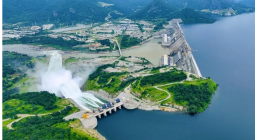
The country’s $5 billion Grand Renaissance Dam, which became fully operational in September, is Africa’s largest hydropower source, able to churn more than 5,000 megawatts of power.
The 14-year project is projected to double the nation’s electricity capacity, solidifying its status as a renewable energy leader. This could be seen as not just a win for Ethiopia, but for Africa.
The second-most populous country on the continent has confirmed plans to supply neighboring regions with low-cost power.
- Cassava Technologies’ AI Factory
AI’s capabilities have been discussed for years, but 2025 felt like AI’s defining moment—the year the world took notice.
It was a historic year for innovation, accelerated by the emergence of Nvidia’s Graphics Processing Units (GPUs). Silicon Valley lapped up its AI-centric potential, leaving Africa, seemingly, in the wake of another industrial revolution.
However, in March, Cassava Technologies, owned by Zimbabwean billionaire, Strive Masiyiwa, announced its partnership with Nvidia, the world’s most valuable company as at December 2025, with a market cap of around $4.5 trillion, to build the region’s first AI factory.
At the time of the proclamation, Cassava President Hardy Pemhiwa, revealed that 3,000 Nvidia GPUs would be embedded into their South African facility in 2025 before allocating 9,000 more across Kenya, Nigeria, Morocco, and Egypt over the next three to four years.
- Dangote Petroleum Refinery
Africa’s richest man, Aliko Dangote, has led the charge for African crude oil processing, highlighted by the expansion of Nigeria’s Dangote Petroleum Refinery in 2025.
Early last year, the facility’s capacity rose to 650,000 barrels-per-day following a $20 billion construction effort, Reuters reported. This provided much-needed stability against fuel price shocks, which have become a common occurrence across the West African nation.
While the refinery is offering local support, it’s built to become an intra-African supplier, reducing the region’s reliance on foreign fuel, and–supported by the African Continental Free Trade Area Agreement (AfCFTA)–set to shrink the costs associated with overseas transportation and logistics.
- The Tanzania Standard Gauge Railway
On the topic of transportation and logistics, Africa’s inconsistent terrain has imposed time-consuming bottlenecks for centuries.
Unpaved roads drastically prolong trips, while cross-border travel only adds to the challenge. The newly-implemented AfCFTA has somewhat eased the latter constraint, while Tanzania’s Standard Gauge Railway, designed to eventually connect Rwanda, Uganda, Burundi and the Democratic Republic of the Congo to maritime trade, could offer a fresh perspective on African transport.
Expected to stretch 1,219 kilometers, the ongoing project began freight operations between Dodoma and Dar es Salaam in June, expanding its operation from passenger services.
Cover photo: Getty Images