

GHG Emissions May Be Set to Peak, 2025 Data Shows
Recent signs that global greenhouse gas emissions may finally be nearing their peak and poised to soon move downward give cause for cautious hope in a narrative dominated by despair, say climate scientists and advocates.
One such sign came in early July, in startling data collected by Climate TRACE, reports the journal Science. Climate TRACE is a global non-profit collaboration of academics, environmental think tanks, and companies that uses energy statistics, satellite data, and artificial intelligence to track and map fossil fuel combustion.
As Climate TRACE researchers “began to push out monthly global GHG estimates for January, February, and March, the news story states, “it was unmistakable that levels were lower than at the same time last year.”
China is the probable driver of any possible decline, after spending US$625 billion on clean energy last year, Science notes.
Signs that global GHG emissions are “close—very close—to tipping permanently downward” signal an important “psychological turning point in a story bogged down by despair,” writes veteran climate journalist Karl Mathiesen for Politico Europe.
Such glimmers of hope are critical, given that “resignation can’t shift investment dollars. Nor does it generate pressure on governments,” he adds. Fairer winds for the climate fight are urgently needed as recent polling shows “a global decline in faith that governments will take firmer steps.” A possible emissions peak would be a very good prompt for climate action, Mathiesen says.
Still, it is critical not to overstate the case, as tracking emissions at the granular level required is notoriously difficult. This year, it’s possible that a rainy winter in China boosted hydropower generation, leading to a temporary drop in fossil fuel use.
And even when humans do hit peak carbon, the heavy lifting will be far from over.
“When peak carbon does arrive, it will only mark the starting line of a race to limit the harshest impacts of global warming,” Science warns. Humanity may be finally bending the curve on anthropogenic warming, but supercharged “natural” sources of GHGs, such as wildfires and melting permafrost, alongside declining carbon sinks, pose great and escalating peril.
“Last year, while human emissions only crept up, atmospheric levels of CO2 grew a record amount,” Science notes.
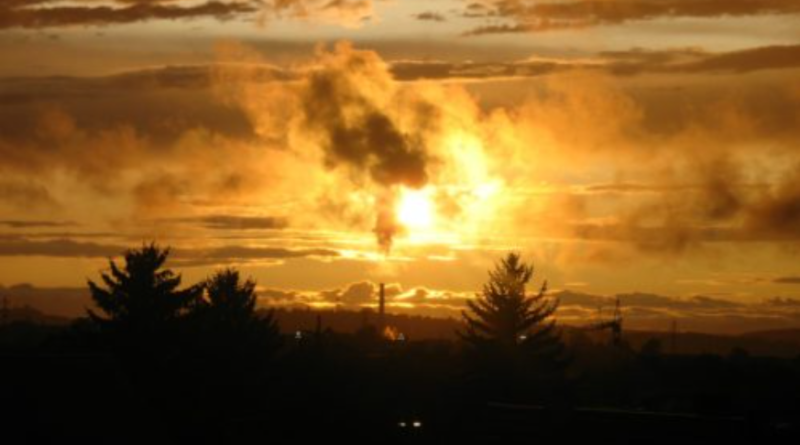
Cover photo: Maxpixels