

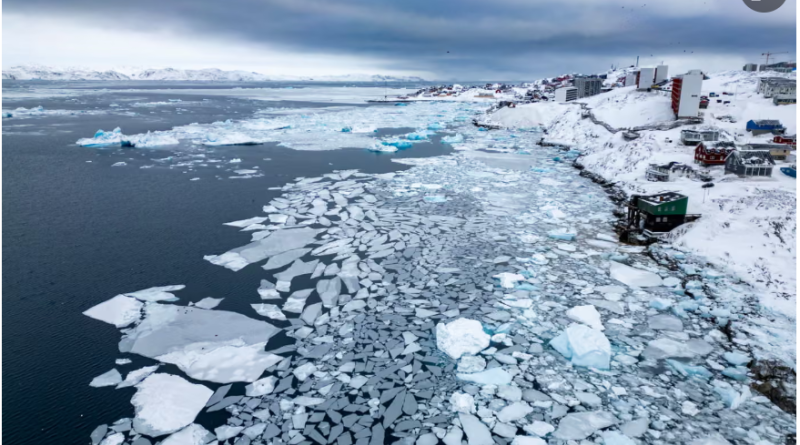
“This year was the warmest on record and had the most precipitation on record – to see both of those things happen in one year is remarkable,” said Matthew Langdon Druckenmiller, an Arctic scientist with the National Snow and Ice Data Center at the University of Colorado and an editor of the Arctic report card. “This year has really underscored what is to come.”
Scientists have been struck by how exceptional warmth in other seasons, particularly summer, is now becoming evident in winter too, affecting the annual growth of sea ice across the Arctic in its coldest months. In the past month or so, sea ice extent has been the lowest on record, potentially heralding another reduced maximum for sea ice next year.
“There’s been a steady decline in sea ice and unfortunately we are seeing rain now even in winter,” said Druckenmiller. “We are seeing changes in the heart of winter, when we expect the Arctic to be cold. The whole concept of winter is being redefined in the Arctic.”
These changes are acutely felt by people and wildlife in the Arctic – rain falling on to snow can freeze into a barrier that makes it harder for animals to forage for food, while also making for more slippery, hazardous conditions for people traveling by road. The retreat of glaciers can also cause potentially dangerous flooding, as seen in Juneau, Alaska, this year.
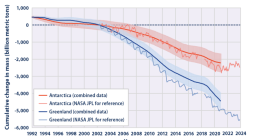
The loss of sea ice is opening up vast areas of dark ocean, which is absorbing, rather than reflecting, more of the heat that is raising global temperatures. While the melting sea ice isn’t itself causing the seas to rise, the loss of land-based glaciers is, with Noaa reporting that the huge Greenland ice sheet lost 129bn tons of ice in 2025. This will add to sea level rise that will menace coastal cities for generations to come.
“We are seeing cascading impacts from a warming Arctic,” said Zack Labe, a climate scientist at Climate Central. “Coastal cities aren’t ready for the rising sea levels, we have completely changed the fisheries in the Arctic which leads to rising food bills for sea food. We can point to the Arctic as a far away place but the changes there affect the rest of the world.”