

‘Unicorn status’ | Hydrogen drone pioneer achieves $1bn valuation after raising $100m of Series B funding
US-Israeli firm Heven AeroTech specialises in fuel-cell propulsion that allows long-distance, near-silent unmanned flight
US-Israeli hydrogen drones pioneer Heven AeroTech has achieved a $1bn valuation after raising $100m in Series B funding.
The Virginia-headquartered company, which was founded in 2019, manufactures AI-powered fuel-cell unmanned aerial systems (UASs) designed to fly further and more quietly than conventional battery-powered drones.
The new funding, led by US quantum computing company IonQ, will “position Heven AeroTech to meet escalating demand from US Special Operations Command, combatant commands, and allied forces for long-endurance, energy-independent UAS platforms”, Heven states.
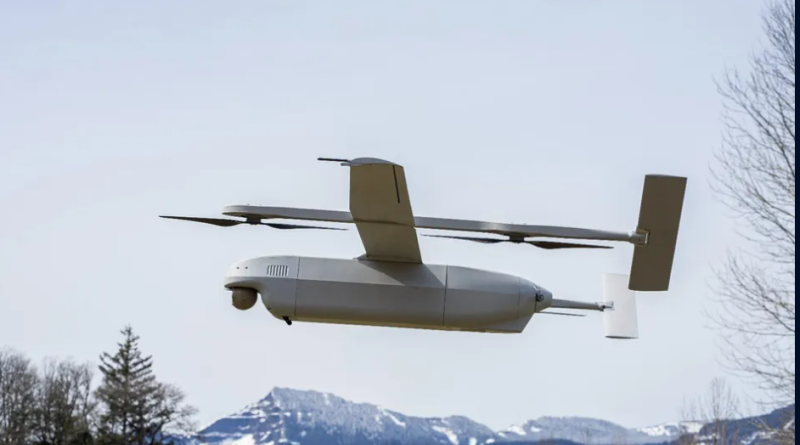
Its flagship Z1 platform “achieves flight times exceeding 10 hours and ranges of over 600 miles [965km], delivering unprecedented operational capability for defense, public safety, and commercial missions”, the company adds.
Heven CEO and founder Bentzion Levinson declared: “Reaching unicorn status validates not just our technology, but our execution.
“This capital will enable us to scale US manufacturing capacity, accelerate quantum-enabled capabilities across our platform, and deliver long-endurance hydrogen-powered systems at the speed and volume our national security customers demand. We’re building for the battlefield of today and tomorrow.”
The funding will, among other things, allow Heven to launch “a new quantum-focused engineering division with an emphasis on integrating quantum computing capabilities directly into Heven's platforms”, in partnership with IonQ.
“This new division will significantly expand Heven's product offerings to provide customers with superior, next-generation solutions for positioning, navigation, and timing (PNT) requirements in contested and degraded operating theaters, a critical need identified by the Pentagon following lessons learned from conflicts in Ukraine and Gaza.”
The idea is that quantum-computing capabilities will allow unhackable communications, fully autonomous operation and navigation in environments where GPS (satellite-based global positioning) is denied.
On top of this, the new funding will also allow Heven to build out “hydrogen generation and logistics infrastructure to support persistent forward operations”.
And hydrogen-powered fuel-cell drones have several advantages over more conventional battery-powered UASs — they can fly further without refuelling/recharging, are far quieter and operate at cooler temperature, making it harder for the enemy to detect them by found or thermal-imaging equipment.
Hydrogen can also be manufactured in the field using solar panels and electrolysers, thus removing the need for long supply lines that can also be attacked.
Earlier this year, it was announced that China had developed a hydrogen-powered reconnaissance UAS that could fly for 30 hours while continuously sending live video to its operators.
And while Heven believes that it has achieved “unicorn status”, several other companies around the world that have unveiled hydrogen fuel-cell drones, including the UK’s ISS Aerospace and three South Korean companies: Hylium Industries, Hogreen Air and Doosan Mobility.
“Our customers urgently need thousands, and eventually tens of thousands, of drones to be deployed in-theater," Levinson said at the time. “Our goal is to provide quick-turn, full-scale American manufacturing of the most versatile, reliable, and powerful platforms available to the warfighter.”
Mach Industries was formed in 2023 to mass-produce advanced weapons systems in hundreds of small, decentralised factories that the enemy would be unable to locate and destroy.
US defense secretary Pete Hegseth told the US Senate at his confirmation hearing in January: “Unmanned [drones] will be a very important part of the way future wars are fought. Just the idea of survivability for human beings — to drive cost and time in ways that manned systems do not.”
Heven was originally founded as Heven Drones in Israel in 2019, and still performs research and development there, despite moving its headquarters to first Miami, and then Sterling, Virginia, a few miles away from the Pentagon and Washington DC.
Cover photo: Heven AeroTech's flagship Z1 platform